

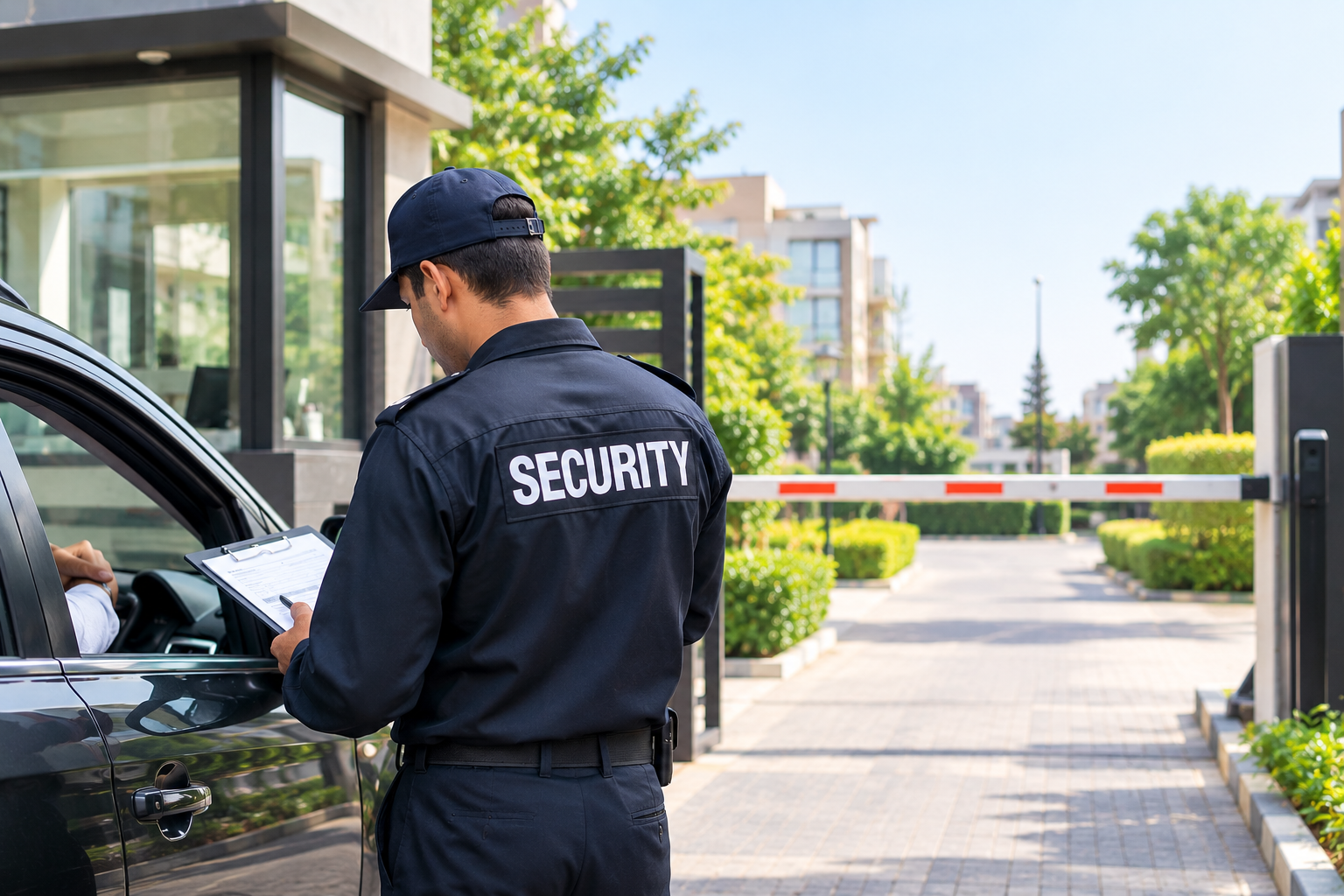
A gate security SOP provides a structured method for controlling who and what enters or leaves a property. At a commercial facility, residential complex, warehouse, factory, office campus, hospital, or industrial site, the main gate is often the first point where security risks can be identified and controlled.
A well-designed procedure helps security personnel verify visitors, employees, vehicles, contractors, deliveries, and outgoing materials before granting access. It also establishes consistent documentation, escalation procedures, communication methods, and emergency responses.
For organisations using professional security guard services in Bangalore, a clearly documented gate procedure can help security teams perform their duties consistently across shifts. The exact controls should be adapted to the site’s risk profile, operating hours, access systems, and management requirements.
What Is a Gate Security SOP?
A gate security SOP is a written set of instructions that defines how security personnel should manage entry and exit at a property’s gate. It normally covers identity verification, visitor registration, vehicle checks, employee access, material movement, gate passes, restricted access, incident reporting, and emergency escalation.
The objective is not simply to stop unauthorised people. It is to create a controlled and traceable process for legitimate movement while identifying unusual activity before it becomes a security problem.
A typical gate procedure may define:
- Who is permitted to enter
- Which documents or credentials must be checked
- When visitor approval is required
- How vehicles are recorded
- How incoming and outgoing materials are verified
- When bags, vehicles, or packages may be inspected
- Who can authorise exceptions
- How incidents and refusals are documented
Why Is Gate Security Important?
Gate security creates a controlled boundary between a property and the outside environment. Without a consistent process, security personnel may apply different rules across shifts, making it easier for unauthorised access, material loss, identity misuse, or record gaps to occur.
A properly implemented procedure helps organisations:
- Control authorised and unauthorised access
- Maintain visitor and vehicle records
- Verify deliveries and outgoing materials
- Reduce confusion during shift changes
- Support investigations through documented records
- Improve coordination between guards and management
- Establish clear escalation responsibilities
- Strengthen emergency preparedness
For large facilities, gate controls should also complement physical barriers, surveillance, lighting, communication systems, and access-control technology. BIS material on physical security notes the importance of controlling vehicle access at entry and exit points, including appropriate barriers and related security measures.
How Does a Gate Security SOP Work?
The process generally follows a simple sequence: identify the person or vehicle, verify the reason for entry, confirm authorisation, record the movement, and provide access only when the required conditions are satisfied.
1. Employee Entry
Employee access should be based on the site’s approved identification or access-control system.
Security personnel may verify:
- Employee ID card or approved credential
- Access validity
- Entry timing where shift restrictions apply
- Restricted-area permissions
- Unusual or unauthorised attempts
Where electronic access control is available, the guard should follow the site’s established procedure rather than bypassing the system for convenience.
2. Visitor Entry
A visitor entry SOP should clearly explain how guests, vendors, contractors, interview candidates, service personnel, and other non-employees are handled.
A practical visitor process can include:
- Ask the visitor’s name and purpose.
- Request appropriate identification according to site policy.
- Confirm the host or department.
- Obtain approval where required.
- Record arrival details.
- Issue a visitor pass if applicable.
- Direct or escort the visitor according to site rules.
- Record exit and collect the temporary pass.
Visitors should not be allowed to enter restricted areas simply because they know an employee or claim to have an appointment. If authorisation cannot be confirmed, the matter should be escalated to the designated contact.
3. Vehicle Entry
A vehicle entry security procedure should distinguish between employees’ vehicles, visitors’ vehicles, delivery vehicles, contractors, taxis, and other authorised categories.
Security personnel may check:
- Vehicle registration number
- Driver identity
- Purpose of visit
- Delivery documentation
- Parking or loading instructions
- Authorised destination
- Vehicle pass where applicable
For higher-risk sites, management may also establish rules for under-vehicle inspection, cargo verification, prohibited items, boom barriers, RFID systems, or designated inspection areas.
4. Material Entry and Exit
Material movement requires particular attention because goods can enter or leave a facility legitimately while still creating documentation or loss risks.
A material gate pass procedure should establish what documents are required before material is permitted through the gate.
The guard may verify:
- Material description
- Quantity
- Supplier or department
- Vehicle details
- Delivery challan or other authorised document
- Purchase or work order reference where applicable
- Gate pass number
- Authorising person’s details
For outgoing material, the security team should verify that the material matches the approved documentation. Any mismatch should be held for clarification rather than resolved informally at the gate.
Gate Security Checklist for Daily Operations
A practical gate security checklist should be simple enough for guards to use during busy periods without overlooking essential controls.
Opening or Shift Handover
- Check gate equipment and communication devices
- Review previous shift incidents
- Confirm pending visitor or vehicle information
- Verify registers or digital systems
- Check barriers, lights, cameras, and access-control equipment
- Confirm emergency contact information
During the Shift
- Verify identity before granting access
- Record required visitor movements
- Check vehicle and delivery information
- Confirm material documentation
- Prevent tailgating or unauthorised following
- Keep restricted gates and access points controlled
- Report unusual behaviour or documentation discrepancies
- Maintain clear communication with the control room or management
Closing or Shift Handover
- Reconcile visitor passes
- Confirm temporary passes returned
- Review vehicle or material movement records
- Report unresolved incidents
- Transfer important information to the incoming guard
- Secure registers and sensitive records
Common Problems at Security Gates
Even a documented procedure can fail if personnel apply it inconsistently. Common operational problems include:
Allowing Entry Without Proper Authorisation
A visitor may claim that an employee is expecting them. The correct response is to verify the claim through the approved communication channel rather than relying on verbal assurances.
Incomplete Records
Missing vehicle numbers, visitor details, timestamps, or material references can make later verification difficult. Records should be completed at the time of movement.
Informal Material Removal
Allowing an employee or contractor to take material out without appropriate documentation creates an avoidable control gap.
Tailgating
Tailgating occurs when an unauthorised person follows an authorised person or vehicle through a controlled entry point. Guards should monitor the gate closely and follow the site’s access-control rules.
Poor Shift Handover
Important information can be lost when outgoing guards do not properly communicate pending visitors, expected deliveries, incidents, or access restrictions.
How Can Organisations Improve Gate Security?
The most effective approach is to combine written procedures with trained personnel, appropriate technology, supervision, and regular review.
Organisations can consider:
- Creating separate procedures for employees, visitors, vehicles, and materials
- Using standard registers or digital access systems
- Defining approval authorities
- Installing appropriate surveillance at entry points
- Using boom barriers or controlled vehicle lanes where suitable
- Conducting periodic guard briefings
- Reviewing incidents and near-misses
- Testing emergency communication procedures
- Updating procedures when site operations change
A professional security company in Bangalore can also help organisations develop site-specific deployment and gate-control practices based on the property’s operating environment.
For private security personnel in India, organisations should also consider applicable requirements under the Private Security Agencies (Regulation) Act, 2005 and relevant rules. The Ministry of Home Affairs maintains the applicable Acts and Rules, including the Central Model Rules.
What Should a Gate Security SOP Include?
At minimum, the document should clearly identify:
| Control Area | Key Requirement |
| Employees | ID and authorised access verification |
| Visitors | Identity, host confirmation, entry and exit records |
| Vehicles | Registration, driver and purpose verification |
| Materials | Documentation, quantity and authorisation checks |
| Contractors | Approved access and work-area verification |
| Passes | Issue, validity and return controls |
| Emergencies | Escalation and communication procedures |
| Records | Accurate and timely documentation |
| Handover | Pending matters and incidents communicated between shifts |
The exact controls should be customised rather than copied from another site. A manufacturing plant, residential complex, corporate office, warehouse, and construction site may have very different access risks and operational requirements.
Benefits of a Well-Managed Gate Procedure
A consistent gate process can improve both security and daily operations. It gives guards clear instructions, reduces ambiguity, and provides management with records that can be reviewed when an incident occurs.
Key benefits include:
- Better access control
- Improved accountability
- More consistent guard performance
- Easier investigation of incidents
- Better visitor management
- Stronger material movement controls
- Improved coordination between departments
- Greater visibility into people and vehicle movement
The Bureau of Indian Standards has also published procurement documentation describing security responsibilities such as controlling entry and exit, maintaining visitor records, checking gate passes, and recording inward and outward movement of people, materials, and vehicles.
Conclusion
A gate security SOP works best when it converts security expectations into clear, repeatable actions. Employee access, visitor verification, vehicle screening, and material movement should each have defined requirements rather than depending entirely on individual guard judgement.
The procedure should also be reviewed regularly as staffing, site layout, operating hours, technology, and security risks change. For organisations managing commercial, industrial, residential, or institutional premises, combining trained security personnel with clear documentation, appropriate access-control measures, and reliable facility management services can create a more controlled and accountable gate operation.
For site-specific security planning and professional support, organisations can evaluate their requirements with PRKGlobal360 and establish procedures suited to their premises and operational environment.
Strengthen Your Gate Security Operations
Build a structured gate security process with trained personnel, clear entry procedures, and site-specific security controls. Connect with PRKGlobal360 to discuss security requirements for your facility.
Call or WhatsApp: +91 96061 71055
Email: prkmanagement.blr@gmail.com
Frequently Asked Questions
What should security guards check at an entry gate?
Security guards should verify the person’s identity, purpose of entry, authorisation, required documents, and applicable access permissions. For vehicles, registration details and delivery information may also need verification. The exact checks should follow the property’s approved procedures and should be documented when required.
How should visitor entry be controlled?
Visitors should normally provide identification and explain their purpose of visit. Security personnel can confirm the host or responsible department before granting access, record the required details, issue a temporary pass where applicable, and ensure the visitor follows the site’s movement restrictions.
What documents are required for material movement?
The required documents depend on the organisation and type of material. They may include an authorised gate pass, delivery challan, purchase or work order reference, material details, vehicle information, and approval from the responsible department. Outgoing material should be matched against approved documentation before release.
How can security guards prevent unauthorised vehicle entry?
Guards can verify vehicle registration, driver identity, purpose, destination, and applicable permits or passes. Sites may additionally use boom barriers, RFID access, CCTV, designated inspection areas, or other access-control measures based on their risk assessment.
Why are visitor and vehicle records important?
Records create an auditable history of movement through the gate. They can help management investigate incidents, verify attendance or access, identify unusual activity, and confirm when visitors, contractors, vehicles, or materials entered and left the premises.
Should every site use the same gate procedure?
No. Gate controls should reflect the site’s operations and risk profile. A warehouse may require detailed delivery and material checks, while a residential property may focus more heavily on visitor and vehicle access. Procedures should therefore be site-specific and reviewed periodically.
How often should gate security procedures be reviewed?
The procedure should be reviewed whenever there is a significant change in site layout, access technology, operating hours, staffing, security incidents, or business operations. Periodic management reviews can also identify outdated instructions, unclear responsibilities, and gaps in documentation.
 Chat on WhatsApp