

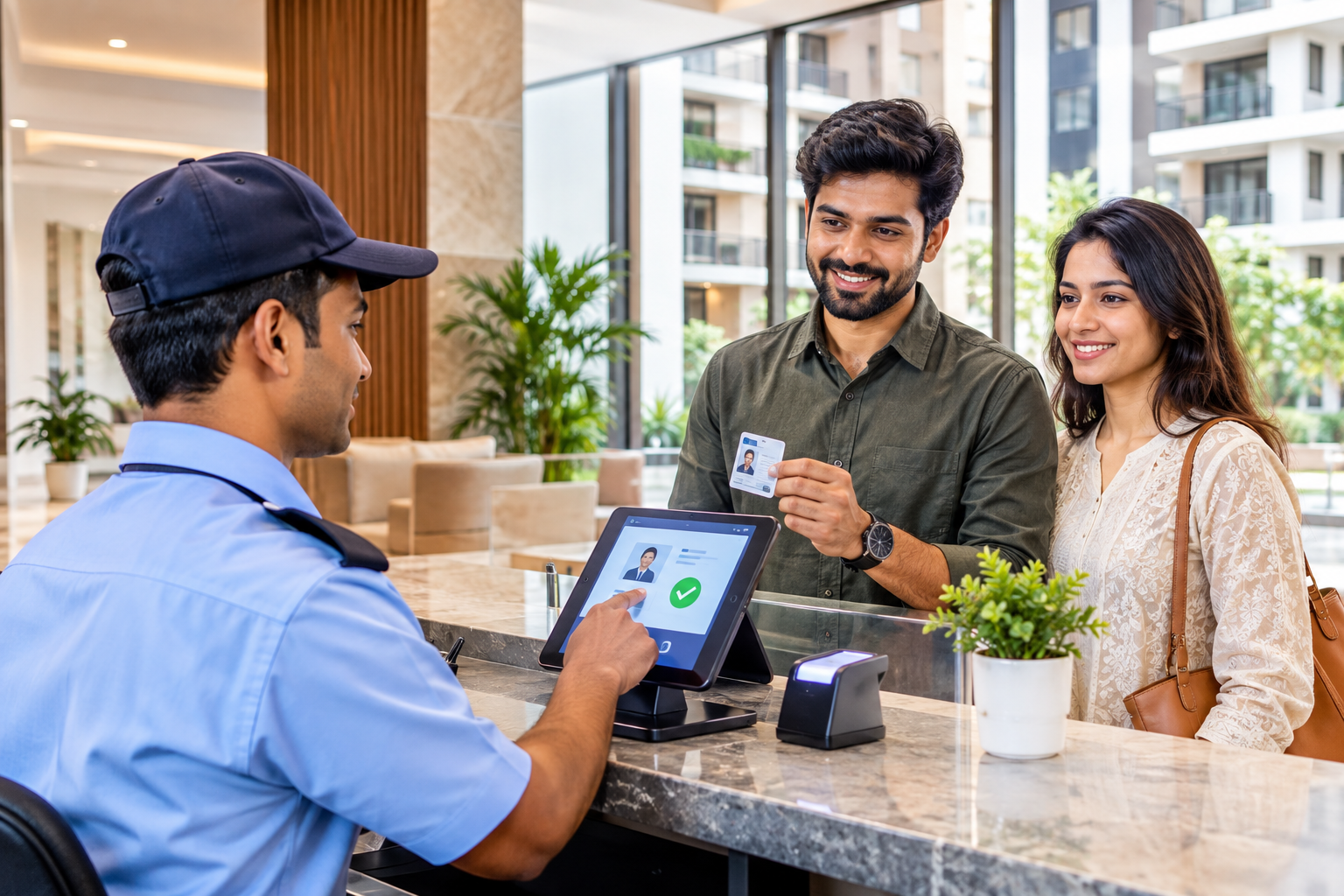
Managing visitors is an essential part of maintaining security in residential societies. From family members and delivery personnel to domestic staff and maintenance workers, apartments receive different types of visitors throughout the day. Recording every entry manually can create delays, increase administrative work and make it difficult to verify who has entered or exited the premises.
A visitor management system for apartments provides a structured way to register visitors, verify their identity, notify residents and maintain entry records. A Facility Management Company in Bangalore can help residential communities implement and manage these systems as part of their broader security and facility operations. By replacing scattered paper registers with a digital process, residential communities can improve entry monitoring and support security personnel in their daily responsibilities. This article explains the essential features, practical benefits, working process and best practices for implementing an effective visitor management solution.
What Is a Visitor Management System for Apartments?
A visitor management system for apartments is a digital or technology-assisted platform that records, verifies and monitors people entering and leaving a residential property. It helps security personnel manage visitor information while allowing residents or authorised management representatives to approve or monitor entry requests.
Unlike traditional registers, digital platforms can maintain searchable records, capture visitor details and provide entry notifications. Depending on the system, visitors may be registered through a security desk, mobile application, QR code or self-service kiosk.
The system can be configured for different visitor categories, including:
- Personal guests: Friends, relatives and other invited visitors.
- Delivery personnel: Food, grocery, courier and parcel delivery staff.
- Domestic staff: Housekeeping professionals, drivers and other regular service personnel.
- Maintenance workers: Electricians, plumbers, technicians and contractors.
- Temporary visitors: Event attendees and other authorised guests.
This categorisation helps security teams apply appropriate verification procedures instead of following the same entry process for everyone.
Essential Features to Look for
The effectiveness of a visitor management platform depends on how well its features support everyday security operations. The following capabilities are particularly useful for residential communities.
1. Digital Visitor Registration
A digital registration facility allows security personnel to record visitor names, contact details, purpose of visit and the apartment they intend to visit. Some platforms also support photograph capture and vehicle registration.
Accurate records make it easier to review previous entries and identify incomplete visitor information.
2. Resident Approval and Notifications
The platform can send an entry request to the concerned resident through a mobile application or another supported communication channel. Residents can review the request and approve or decline it.
This reduces dependence on verbal confirmation and creates a clearer record of entry decisions.
3. QR Code and Pre-Approved Entry
Residents can share digital invitations or QR-based passes with expected guests, where supported by the platform. Security personnel can scan the code to retrieve the relevant visitor information.
Pre-approved entry can reduce repetitive registration work during busy periods, provided the pass is checked for validity.
4. Entry and Exit Tracking
An effective visitor tracking system should record both arrival and departure details. These records help security teams understand who is currently inside the property and review visitor movement when authorised access to records is required.
5. Staff and Delivery Management
Regular domestic staff and delivery personnel may require different registration procedures from occasional guests. A suitable platform can maintain separate categories and apply relevant verification or approval requirements.
6. Reports and Digital Records
Digital records allow authorised management representatives to review visitor activity, identify recurring operational issues and maintain information for administrative purposes. Access permissions should be configured carefully to protect personal information.
How Does the System Work?
A typical visitor entry process follows these steps:
- Visitor arrives: The person approaches the main security gate and identifies the apartment or resident they intend to visit.
- Details are registered: Security personnel enter the required information, or the visitor completes registration through an available digital facility.
- Resident receives a request: The platform sends an entry notification to the concerned resident, where this feature is enabled.
- Entry is verified: Security personnel check the approval status and follow the society’s applicable entry procedure.
- Visitor enters: Once authorised, the visitor is permitted to proceed according to the property’s access rules.
- Exit is recorded: Security personnel update the departure information to maintain a complete movement record.
For regular staff, pre-approved visitors and scheduled maintenance personnel, the process may follow a separate verification procedure established by the residential management.
Key Benefits for Residential Societies
Implementing a visitor management system for apartments can improve several aspects of residential security and administration.
Better Entry Monitoring
Digital records provide a more organised view of visitor arrivals and departures. Security personnel can refer to recorded information instead of relying entirely on handwritten registers or memory.
Improved Resident Awareness
Entry notifications help residents know when someone arrives to meet them. This allows them to respond to unexpected visits and make informed entry decisions.
Reduced Manual Administration
Digital registration reduces repetitive paperwork and makes visitor information easier to retrieve. Security teams can spend less time maintaining physical registers and more time following entry procedures.
More Organised Staff Management
Separate records for domestic staff, delivery personnel and contractors help management establish consistent verification procedures for different visitor categories.
Support for Society Security Management
A centralised record system can support coordination between guards, supervisors, residents and residential management committees. It also helps authorised representatives review security procedures and identify areas requiring improvement.
Better Operational Visibility
Management can examine visitor activity, review unusual entry patterns and assess whether existing gate procedures are working effectively.
Digital Visitor Management vs Traditional Register
Both methods can record visitor information, but they differ in how records are maintained and accessed.
| Comparison Factor | Traditional Register | Digital System |
| Registration | Handwritten entries | Electronic data entry |
| Record retrieval | Manual searching | Searchable records |
| Resident notification | Usually manual | Automated, where supported |
| Entry approval | Verbal or phone confirmation | Recorded digital approval, where supported |
| Reporting | Manual compilation | System-generated reports, where available |
| Record management | Physical storage | Controlled digital storage |
A digital platform can improve convenience and record accessibility. However, it still requires trained personnel, reliable devices and appropriate procedures. A paper-based backup may also be useful during power or network interruptions.
Best Practices for Implementing an Apartment Visitor Management Solution
Selecting suitable software is only one part of improving residential security. Its implementation should also account for the property’s layout, visitor volume and existing security arrangements.
1. Define Entry and Verification Policies
Establish clear rules for guests, delivery personnel, domestic staff, contractors and emergency visitors. Specify which categories require resident approval and which require additional verification.
2. Train Security Personnel
Guards should understand registration procedures, approval notifications, QR verification and exit recording. Practical training helps reduce incorrect entries and unnecessary delays at the gate.
3. Protect Resident and Visitor Information
Collect only the information required for legitimate security and administrative purposes. Restrict access to authorised personnel, use appropriate security controls and establish a reasonable data-retention policy.
Avoid sharing visitor details in open communication groups or allowing unrestricted access to entry records.
4. Maintain a Backup Procedure
Internet connectivity, electricity or digital devices may occasionally become unavailable. Establish a temporary manual registration procedure and define how pending records will be updated once the system becomes operational.
5. Review Reports Regularly
Management should periodically examine entry records, incomplete exit updates and recurring verification issues. These reviews can help identify process gaps and determine whether additional training is required.
6. Integrate Security Operations Where Appropriate
A gated community security system may include CCTV monitoring, access control, visitor registration and guard coordination. Integrating compatible technologies can improve operational visibility, but each component should have a clearly defined purpose.
Common Mistakes to Avoid
Residential communities can reduce implementation problems by avoiding a few common mistakes:
- Choosing software based only on price: Evaluate usability, reporting, support and security controls before making a decision.
- Ignoring exit records: Recording arrivals without updating departures creates incomplete visitor information.
- Using unclear approval policies: Security personnel should know exactly when resident confirmation is required.
- Overlooking staff training: Even a feature-rich platform may perform poorly if guards do not understand its functions.
- Collecting excessive personal information: Registration should remain proportionate to the property’s security requirements.
- Depending entirely on technology: Maintain manual procedures for outages and emergency situations.
How to Choose the Right Solution for Your Apartment?
Before selecting a platform, residential management committees should evaluate the following factors:
- Ease of use: Can guards register visitors quickly without complicated steps?
- Resident accessibility: Can residents receive notifications and respond conveniently?
- Visitor categories: Does the platform support guests, delivery personnel, domestic staff and contractors?
- Reporting capabilities: Can authorised representatives retrieve entry and exit records?
- Data protection: Are access permissions, information security and retention controls clearly explained?
- Technical support: Is assistance available for troubleshooting, training and system maintenance?
- Scalability: Can the platform accommodate changes in the number of apartments, gates and security personnel?
Pricing may depend on the number of apartments, security gates, user accounts, devices, software features, integration requirements and ongoing support. Residential committees should compare the complete implementation and maintenance costs rather than considering the initial subscription alone.
How PRKGlobal360 Can Support Residential Security Operations
Technology works best when supported by clearly defined security procedures and trained personnel. PRKGlobal360 provides Security Services in Bangalore along with facility management solutions that can support residential properties in organising day-to-day security operations.
For apartment communities evaluating digital entry monitoring, combining appropriate technology with trained security personnel, visitor verification procedures and regular supervision can help create a more structured approach to property protection.
Conclusion
Residential security depends on consistent visitor verification, accurate entry records and well-managed access procedures. A visitor management system for apartments can help societies organise these responsibilities while reducing manual administration and improving communication between residents and security personnel.
The right combination of digital tools, trained guards and clearly defined procedures can strengthen everyday security operations. Residential management committees should evaluate their requirements carefully before selecting a suitable platform.
Looking to improve residential security operations? Connect with PRKGlobal360 for professional security and facility management support.
Contact: +91 96061 71055
Email: prkmanagement.blr@gmail.com
Frequently Asked Questions
1. Why do apartments require a visitor management system?
Apartments receive visitors throughout the day, including guests, delivery personnel, domestic staff and contractors. A digital system helps record their movement, support resident verification and improve the organisation of entry procedures.
2. Can residents approve visitors through a mobile application?
Yes, platforms offering mobile approval features allow residents to receive entry requests and respond through an application. The availability of this functionality depends on the selected software and its configuration.
3. Can a digital system manage delivery personnel?
Yes. Suitable platforms can maintain separate visitor categories for food, courier, grocery and parcel delivery personnel. Residential management can establish specific verification and entry procedures for each category.
4. Is a digital visitor management system suitable for small apartment societies?
Yes. Smaller societies can benefit from organised registration and searchable entry records. However, the selected platform should match the property’s visitor volume, available infrastructure, budget and administrative requirements.
5. What happens if the internet stops working?
The response depends on the platform’s offline capabilities. Societies should confirm whether essential registration functions remain available without connectivity and maintain a manual backup procedure for recording entries and exits.
6. How much does an apartment visitor management system cost?
Costs vary according to apartment count, software features, devices, integrations, implementation and support requirements. Management committees should request a detailed quotation and check recurring charges before selecting a provider.
 Chat on WhatsApp