

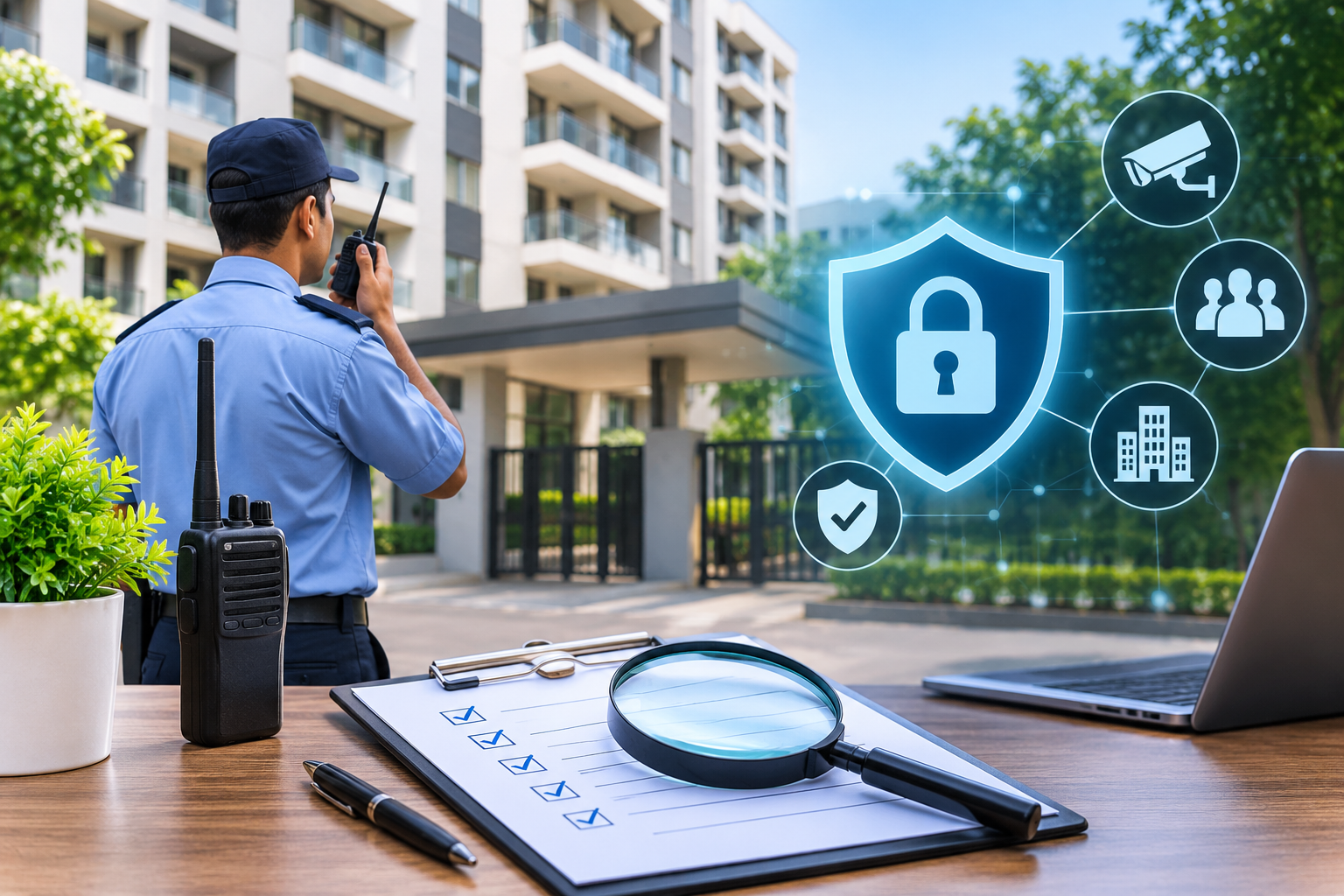
Apartments and commercial properties face different security challenges, from unauthorised entry and theft to poor visitor management, inadequate surveillance and emergency response gaps. Installing CCTV cameras or hiring security guards alone does not address every potential threat. Property managers must first understand where vulnerabilities exist and how they could affect people, assets and daily operations.
A security risk assessment provides a structured way to identify threats, examine existing security arrangements and determine which improvements should receive priority. For residential societies, this may involve reviewing entrance gates, parking areas and visitor records. In workplaces, the focus may extend to employee access, sensitive areas, equipment and emergency procedures. Working with the best security agency in Bangalore can help property managers evaluate potential risks and implement practical security measures rather than relying on assumptions.
What Is a Security Risk Assessment?
A security risk assessment is a systematic process of identifying potential security threats, examining vulnerabilities and evaluating the likelihood and consequences of incidents. It helps property managers understand where security arrangements may be insufficient and which protective measures can reduce exposure.
The assessment considers three important elements:
- Threats: Potential incidents such as theft, trespassing, vandalism, unauthorised access or workplace violence.
- Vulnerabilities: Weaknesses that could allow an incident to occur, such as unsecured entrances, poor lighting or inadequate access controls.
- Impact: Possible consequences, including physical harm, property damage, financial losses, operational disruption and reputational damage.
For example, an apartment complex may have CCTV cameras at its main entrance but no surveillance coverage around its rear boundary. The cameras provide some protection, but the uncovered area remains a potential vulnerability. An assessment helps identify this gap and determine an appropriate corrective measure.
Why Are Security Assessments Important for Apartments and Businesses?
Residential and commercial properties have different operating environments, but both require organised security arrangements. Regular evaluations help identify weaknesses before they contribute to incidents.
1. Better Protection for People and Property
Security evaluations examine how residents, employees, visitors and contractors enter and move through a property. Identifying uncontrolled access points, poorly monitored areas and inadequate emergency arrangements helps reduce avoidable exposure to threats.
2. Improved Access Control
An assessment reviews whether entry procedures are suitable for the property’s size and occupancy. This includes visitor registration, identity verification, employee identification, delivery management and access permissions for restricted areas.
3. More Effective Security Deployment
Security personnel should be positioned according to actual risk rather than convenience. Reviewing property layouts, entry points, operating hours and vulnerable locations helps management plan guard deployment more effectively.
4. Reduced Operational Disruption
Security incidents can interrupt business activities, damage property and create concerns among occupants. Identifying weaknesses in advance helps management prepare suitable preventive measures and response procedures.
5. Stronger Emergency Preparedness
An assessment also examines emergency communication, evacuation routes, incident reporting and coordination with relevant emergency services. These arrangements help occupants respond more effectively when an incident occurs.
Common Security Risks in Apartments and Commercial Properties
A property may have multiple vulnerabilities even when visible security arrangements appear adequate. The following areas deserve attention during an evaluation.
Apartment Security Risks
An apartment security audit should examine:
- Uncontrolled entry through main gates, side entrances or boundary walls.
- Incomplete visitor registration and verification.
- Poor lighting in staircases, corridors and parking areas.
- CCTV blind spots near entrances, lifts and common spaces.
- Unsecured rooftops, service entrances and basement access.
- Inadequate monitoring of delivery personnel and maintenance workers.
- Unclear emergency communication and incident reporting procedures.
For example, if visitors can enter a residential complex without proper registration, security personnel may have difficulty distinguishing authorised guests from unknown individuals.
Workplace and Business Security Risks
A workplace security assessment should consider:
- Employees or visitors accessing restricted departments.
- Unsecured server rooms, storage areas and confidential records.
- Inadequate employee identification procedures.
- Poor monitoring of loading bays and goods movement.
- Insufficient lighting around building perimeters.
- Unclear procedures for handling suspicious behaviour.
- Limited coordination during emergencies.
Warehouses, offices, retail establishments and industrial premises may require different security arrangements based on their activities, assets and operating schedules.
How to Conduct a Security Risk Assessment: Step-by-Step Process
A structured assessment makes it easier to identify problems, compare risks and implement suitable improvements. The following process can be adapted for residential societies and commercial facilities.
Step 1: Define the Assessment Scope
Start by identifying the areas, activities and assets that require evaluation. For apartments, this may include entrance gates, lifts, parking areas, common facilities and boundary walls. For businesses, include reception areas, employee workspaces, storage facilities, restricted departments and external access points.
Clearly defining the scope prevents important locations from being overlooked.
Step 2: Identify Potential Threats
Examine incidents that could affect the property. These may include trespassing, theft, vandalism, unauthorised entry, suspicious deliveries, property damage or aggressive behaviour.
Consider the property’s location, occupancy, operating hours and previous incident records. The objective is to identify realistic threats rather than assume every possible incident is equally likely.
Step 3: Inspect Existing Security Arrangements
Review the effectiveness of current security measures, including:
- Security guard deployment and shift coverage.
- CCTV camera positioning and monitoring.
- Gate access and visitor registration.
- Lighting and perimeter protection.
- Employee identification systems.
- Communication and emergency procedures.
- Security equipment maintenance and inspection records.
An inspection should consider whether these arrangements work in practice, not simply whether equipment or procedures exist.
Step 4: Identify and Evaluate Vulnerabilities
A security vulnerability assessment examines weaknesses that could make an incident easier to carry out.
For instance, a business may have access cards for employees, but shared access credentials could undermine the system. Similarly, an apartment complex may maintain visitor registers without verifying visitor details.
Evaluate each weakness according to its likelihood and potential impact.
Step 5: Prioritise Risks
Not every identified issue requires the same level of attention. A simple risk matrix can help management determine priorities.
| Risk level | Assessment | Recommended action |
| High | Serious potential impact and significant exposure | Immediate corrective action |
| Medium | Moderate exposure or consequences | Planned improvement and monitoring |
| Low | Limited exposure and manageable impact | Routine monitoring |
The assessment should document why a risk received its rating and who is responsible for addressing it.
Step 6: Recommend and Implement Controls
Select measures that directly address identified weaknesses. These may include additional lighting, revised visitor procedures, improved CCTV coverage, controlled access points, trained security personnel and updated emergency response protocols.
Avoid installing equipment without understanding the problem it is supposed to solve.
Step 7: Review and Update the Assessment
Security arrangements should be reviewed periodically and whenever significant changes occur, such as building renovations, new access points, increased occupancy, changes in business operations or security incidents.
Regular reviews help ensure that protective measures remain suitable as property conditions change.
Security Assessment Checklist for Apartments and Businesses
A practical security assessment checklist helps management conduct consistent inspections and record corrective actions.
| Assessment area | What to check |
| Entry and exit points | Access permissions, visitor verification and gate security |
| CCTV surveillance | Camera coverage, recording and monitoring |
| Lighting | Visibility in entrances, corridors and parking spaces |
| Security personnel | Training, deployment and communication |
| Perimeter protection | Boundary walls, gates and vulnerable access points |
| Emergency readiness | Evacuation procedures and emergency contacts |
| Incident management | Reporting, documentation and follow-up |
| Restricted areas | Access permissions and monitoring |
Management should record each observation, its risk level, the recommended action and the person responsible for implementation.
Factors to Consider When Choosing Security Measures
The right security arrangement depends on the property’s layout, occupancy, operating hours, risk exposure and available resources. Management should consider the following factors before approving improvements.
1. Property size and layout: A multi-building apartment complex may require different access arrangements from a single-office property.
2. Occupancy and movement: Consider the number of residents, employees, visitors, vendors and delivery personnel entering the premises.
3. Operating hours: Businesses operating at night or handling valuable goods may require additional monitoring and security coverage.
4. Existing infrastructure: Evaluate whether current cameras, access controls, lighting and communication equipment are suitable and properly maintained.
5. Budget and priorities: Allocate resources to higher-risk areas first instead of purchasing equipment without a clear security objective.
When Should You Hire Professional Security Audit Services?
Professional security audit services can be useful when a property has complex access arrangements, recurring security incidents, multiple buildings or limited in-house security expertise.
A professional evaluation can help management:
- Examine physical security arrangements across the premises.
- Identify access control and surveillance weaknesses.
- Review guard deployment and operational procedures.
- Evaluate emergency response and incident reporting arrangements.
- Prepare prioritised recommendations for corrective action.
- Establish a framework for ongoing security monitoring.
For example, an apartment association experiencing repeated unauthorised entry may benefit from an independent review of gate operations, visitor verification, CCTV coverage and guard responsibilities.
Prkglobal360 provides security and facility management solutions for residential and commercial environments. Its security services can complement a property’s assessment findings through structured security personnel deployment, access management and operational monitoring.
Common Mistakes to Avoid During a Security Assessment
Even properties with security equipment and trained personnel can have gaps if their arrangements are not regularly reviewed.
Some common mistakes include:
- Focusing only on CCTV cameras: Surveillance cannot replace access control, physical inspections and trained personnel.
- Ignoring less-visible areas: Basements, rooftops, rear entrances and service passages can be overlooked.
- Using the same security plan everywhere: Residential societies, offices, warehouses and retail premises have different risk profiles.
- Neglecting employee and visitor procedures: Unclear responsibilities can weaken otherwise effective security systems.
- Failing to document findings: Without records, management may struggle to track corrective actions and recurring weaknesses.
- Not reviewing implemented measures: Equipment and procedures must be checked to confirm that they continue to work effectively.
How Often Should a Property’s Security Be Reviewed?
There is no single review frequency suitable for every property. The schedule should reflect the property’s risk exposure, operating environment and previous incidents.
For practical management, residential societies and businesses can establish periodic inspections and conduct additional reviews after significant incidents, renovations, changes in occupancy or modifications to access arrangements. Hiring a professional security guard Bangalore can further support these efforts by maintaining access control, monitoring visitor movement and reporting suspicious activities.
A review should also confirm whether previously identified issues have been corrected, whether security personnel follow established procedures and whether emergency arrangements remain suitable.
The National Protective Security Authority (NPSA) recommends treating protective security risk management as an ongoing process, with reviews when threats or operating conditions change.
Conclusion
A well-planned security risk assessment helps apartment associations and businesses understand their security weaknesses, evaluate potential threats and prioritise suitable protective measures. From visitor management and CCTV monitoring to security personnel deployment and emergency preparedness, every arrangement should address the property’s actual risk exposure. Regular inspections and documented corrective actions also help maintain effective security practices as operating conditions change.
Prkglobal360 offers security services and facility management company for residential and commercial properties. Contact the team to discuss security arrangements, guard deployment and property protection requirements.
Contact Prkglobal360
- Phone: +91 96061 71055
- Email: prkmanagement.blr@gmail.com
Frequently Asked Questions
1. What is the main purpose of a security risk assessment?
Its main purpose is to identify potential threats, examine weaknesses in existing security arrangements and prioritise corrective measures. It helps property managers make informed decisions about access control, surveillance, security personnel, emergency procedures and property protection.
2. What is included in an apartment security audit?
An apartment security audit typically examines entrance gates, visitor registration, CCTV coverage, parking areas, boundary walls, lighting, guard deployment, service entrances and emergency communication. The assessment also reviews whether residents, visitors and contractors follow appropriate entry procedures.
3. How is a workplace security assessment conducted?
It involves inspecting the workplace, identifying valuable assets, reviewing access permissions, examining surveillance systems, evaluating potential threats and assessing emergency procedures. Findings are prioritised according to their likelihood and potential impact before appropriate security improvements are recommended.
4. What is the difference between a security audit and a security risk assessment?
A security risk assessment identifies threats, vulnerabilities and potential consequences to determine priorities. A security audit generally examines whether existing security systems, policies and procedures are properly implemented and functioning. Both processes can complement each other.
5. What factors affect the cost of security audit services?
Costs depend on property size, number of buildings, assessment scope, site complexity, security systems, operating hours and the expertise required. A detailed evaluation may also involve documentation reviews, physical inspections and recommendations for corrective measures.
6. Can a security assessment help reduce theft and unauthorised entry?
Yes. It can identify weaknesses in entry procedures, surveillance coverage, perimeter protection and security personnel deployment. Corrective measures based on these findings can reduce opportunities for unauthorised access and improve incident detection, although no security arrangement can eliminate every risk.
 Chat on WhatsApp