

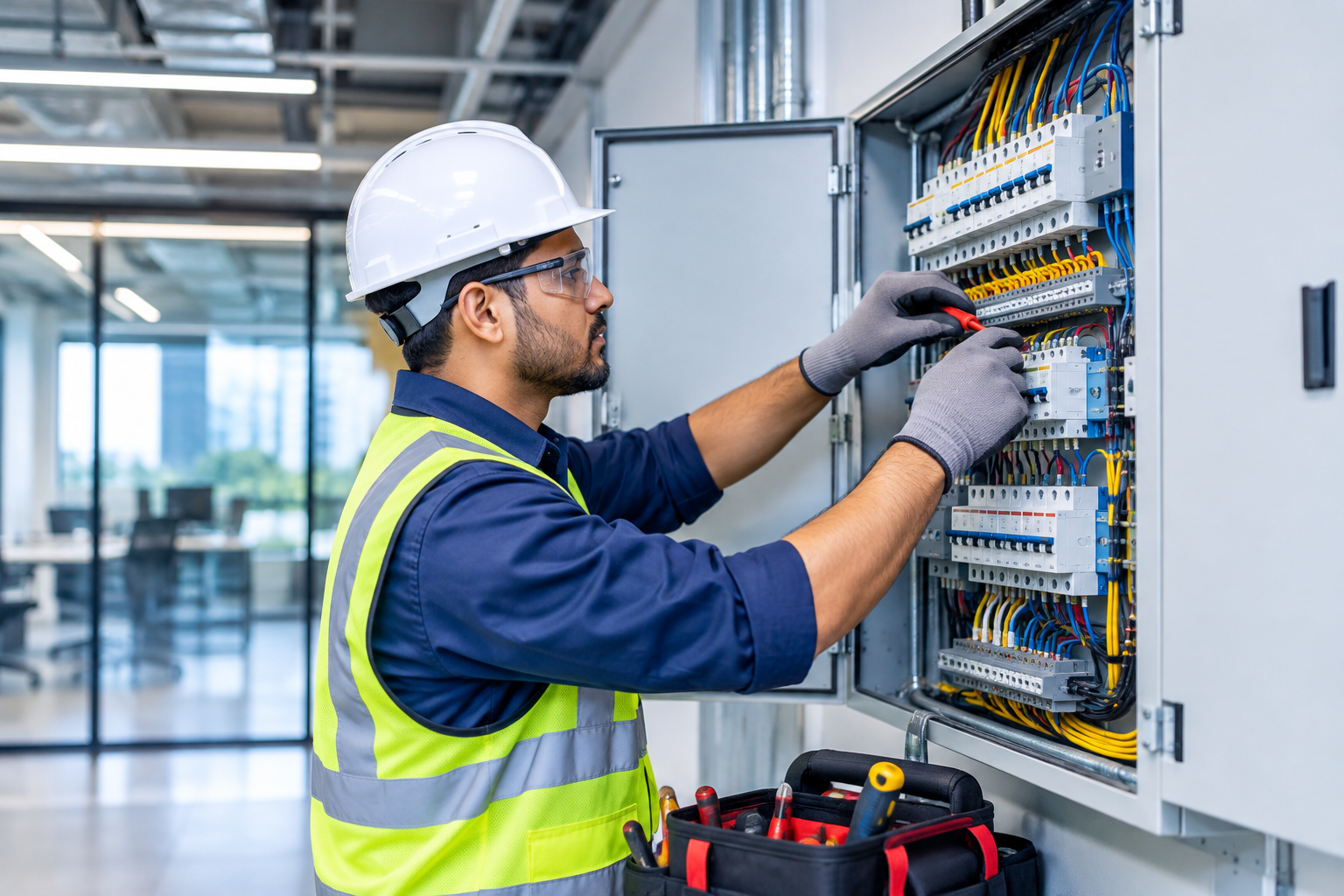
Commercial buildings depend on electrical systems for lighting, HVAC equipment, lifts, security systems and daily operations. Poorly maintained wiring, overloaded circuits, loose connections and damaged components can create safety risks and unexpected disruptions. Regular electrical maintenance services help facility managers identify developing faults, maintain equipment condition and plan repairs before problems affect building operations. A structured preventive programme should also coordinate with facility maintenance services to ensure electrical installations are inspected, documented and maintained according to equipment requirements and applicable safety regulations.
Why Preventive Electrical Maintenance Matters
Electrical faults can lead to equipment damage, unplanned downtime, fire risks and disruption to occupants. A planned programme of electrical maintenance services gives property teams a consistent way to identify and address developing issues. It also connects electrical work with wider facility maintenance services.
Preventive maintenance is not simply a calendar reminder to inspect equipment. It combines routine visual checks, planned testing, timely repairs and records showing what was inspected, what was found and what action followed. The Central Public Works Department (CPWD) recommends scheduled checks, installation records and repairs by skilled personnel.
Commercial Building Electrical Maintenance Checklist
Use this checklist as a planning aid, not as a substitute for equipment manuals, risk assessments or applicable inspection requirements.
1. Main Panels and Distribution Boards
- Check enclosures for damage, corrosion, dust, moisture or overheating.
- Keep access clear; check that doors, covers and labels are intact.
- Review breaker operation, indicator lamps, meters and unusual tripping patterns.
- Arrange qualified inspection of connections, protection settings and internal components according to the maintenance plan.
Routine electrical maintenance services should include documented panel observations, with intrusive checks assigned to qualified personnel. Panels should not be opened or worked on by unqualified staff.
Any signs of burning, abnormal heat, buzzing or repeated tripping should be escalated promptly. A qualified technician can determine whether isolation, testing or component replacement is required.
2. Wiring, Cables and Electrical Outlets
Inspect accessible cable routes, conduits, trunking, sockets and switches for visible wear, loose fittings, exposed conductors, water ingress or physical damage. Check that cables are not pinched, overloaded or routed where they may be struck or exposed to heat.
Include these conditions in the building’s electrical maintenance services work plan. Record damaged outlets and unsafe temporary wiring for repair. Avoid makeshift extensions and unauthorized modifications.
Recurring faults require investigation rather than repeated temporary fixes. This should be an important part of the maintenance plan.
3. Earthing and Protective Devices
Include earthing and bonding connections, residual-current protection where installed, circuit breakers, fuses and surge protection in the planned inspection programme. These checks form an important part of electrical maintenance services because protective components must be assessed as part of the complete installation.
Keep test results and corrective actions with the building’s electrical records. CPWD guidance includes periodic earth and insulation testing. Actual intervals should be confirmed against applicable requirements, equipment instructions and site conditions.
Central Public Works Department+1
4. Lighting and Emergency Systems
Lighting inspections should be included in electrical maintenance services alongside checks of common-area, staircase, parking, external and task lighting for failed lamps, damaged fittings and unreliable controls.
Confirm that emergency lights and exit signs are included in the site’s inspection and functional-testing schedule.
Where backup power supports critical loads, include associated changeover arrangements and connected distribution equipment in the maintenance plan. Coordinate testing to protect essential building operations and occupants.
5. Electrical Rooms and Environmental Conditions
Keep electrical rooms dry, clean, ventilated and free from unrelated storage. Look for water leaks, pest activity, blocked ventilation and excessive dust. Verify that access is controlled and warning labels are visible.
Poor environmental conditions can contribute to corrosion, overheating or accidental contact. These checks also support broader hard services and building maintenance services across the property.
How Often Should Checks Be Carried Out?
There is no single frequency suitable for every commercial building. A practical schedule combines routine visual observations by trained facility staff with periodic technical inspections and testing by qualified electrical personnel. High-load areas, older equipment, critical operations and previous fault history may justify closer attention.
Set maintenance intervals based on manufacturer recommendations, applicable regulations, equipment condition and documented risk assessments. The maintenance plan should clearly identify the responsible person, assigned task, due date, inspection findings and closure status. A sample checklist should be treated as a planning reference, not a compliance certificate. Businesses can also consult Maintenance & Engineering Services in Bangalore for structured maintenance planning, equipment inspections and engineering support.
Records Every Facility Team Should Maintain
A useful maintenance record should include:
- Asset identification, location and equipment details.
- Inspection and test dates, methods and results.
- Defects, risk level, temporary controls and repair priority.
- Work orders, parts replaced and technician details.
- Outstanding actions, completion dates and approval.
Records help teams identify recurring failures and plan budgets. For organizations coordinating technical facility management services or industrial maintenance services across multiple sites, a common reporting format makes outstanding risks easier to track.
Safety and Contractor Coordination
Electrical maintenance services should be delivered by personnel with the appropriate competence for the equipment and task. Electrical inspection, testing and repair must be assigned to those personnel.
Before work begins, establish the work scope, risk controls, isolation arrangements and authorization process. Verify that equipment is safely de-energized where required and prevent accidental re-energization.
Staff without electrical qualifications should report warning signs rather than remove covers, repeatedly reset tripping equipment or attempt repairs. OSHA electrical safety guidance also emphasizes qualified personnel and appropriate energy-control procedures.
For property teams reviewing facility management in bangalore, electrical upkeep should be part of wider building operations.
PRKGlobal360 is a relevant point of contact for facility management services enquiries. Property managers can visit its website to review the company’s information and confirm the appropriate service scope for their requirements.
Conclusion
A reliable preventive programme combines panel inspections, cable and outlet checks, protective-device testing, lighting reviews, clean electrical rooms and accurate maintenance records. Planned electrical maintenance services help commercial property teams identify defects, organize corrective work and support safer building operations. PRKGlobal360 is a relevant contact for facility-related enquiries. Define the building’s assets, inspection responsibilities and maintenance intervals before putting the checklist into operation.
Discuss Your Facility Requirements
For enquiries about facility management and building upkeep, contact PRKGlobal360 through its official website:
Phone: +91 96061 71055
Email: prkmanagement.blr@gmail.com
Share your building type, location and maintenance priorities to discuss the appropriate next steps.
Frequently Asked Questions
1. What should a commercial electrical maintenance checklist include?
It should cover distribution panels, cables, outlets, earthing, protective devices, lighting, emergency systems, electrical rooms, inspection records and corrective actions. The exact scope depends on the installation and its operating risks.
2. Who should inspect electrical systems in a commercial building?
Routine visual observations can be assigned to appropriately trained staff, but electrical testing, panel work and repairs should be completed by personnel qualified for the specific equipment, task and site-specific hazards.
3. How frequently should electrical equipment be inspected?
Inspection frequency depends on manufacturer instructions, equipment condition, building use, risk assessment and applicable requirements. A competent person should establish and review the schedule rather than applying one interval to every asset.
4. Why are maintenance records important?
Records show inspection history, test results, recurring defects, completed repairs and outstanding actions. They help facility teams prioritize work, demonstrate maintenance activity and plan future equipment assessments with supporting documentation.
5. Are electrical checks part of hard services?
Yes. Electrical systems are generally treated as hard services because they involve the building’s physical engineering infrastructure. Their upkeep is commonly coordinated with other technical building operations within the building’s service plan.
6. Can general facility staff repair electrical faults?
Staff without the required electrical competence should not attempt repairs or work on exposed electrical parts. They should report hazards, restrict access where appropriate and arrange assessment by qualified personnel and notify the responsible manager.
 Chat on WhatsApp