

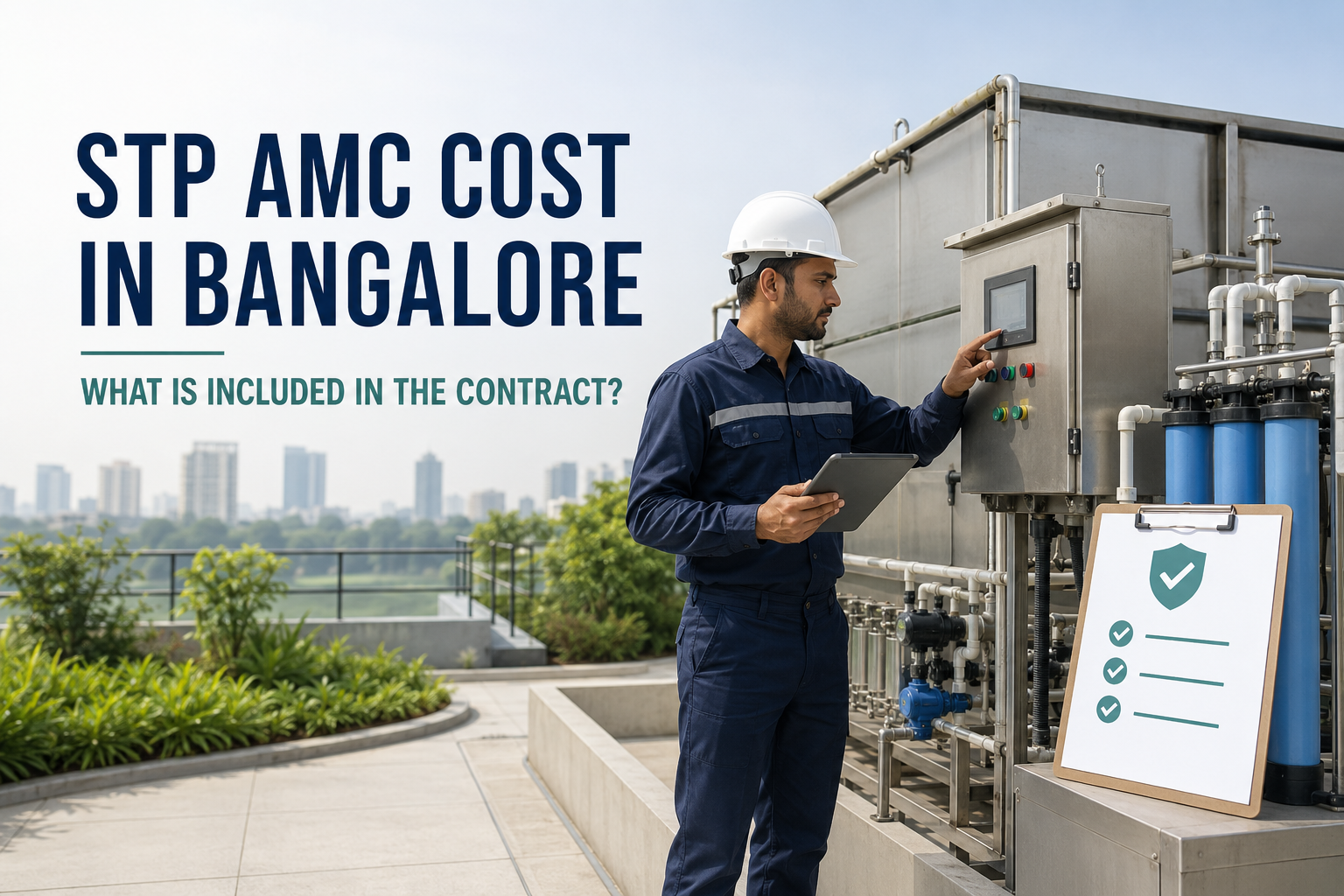
Managing a sewage treatment plant is not just about keeping the system operational—it is about ensuring regulatory compliance, maintaining water quality, reducing operational costs, and extending the lifespan of critical equipment. For apartments, commercial buildings, hotels, hospitals, industries, and educational institutions, investing in professional STP Maintenance Services in Bangalore and the right STP AMC cost in Bangalore is often more economical than dealing with unexpected equipment failures and costly emergency repairs.
An Annual Maintenance Contract (AMC) provides scheduled inspections, preventive maintenance, equipment servicing, process monitoring, and technical support to ensure the sewage treatment plant operates efficiently throughout the year. However, many property owners and facility managers wonder what exactly is covered under an AMC and what factors influence the pricing.
In this guide, we explain what is typically included in an STP AMC, the factors affecting pricing, and why choosing the right maintenance partner can deliver long-term value.
Call or WhatsApp: +91 96061 71055
What Is an STP Annual Maintenance Contract?
An STP annual maintenance contract is a structured service agreement between a facility owner and an experienced STP service provider. Instead of waiting for equipment to fail, the maintenance team performs scheduled inspections, preventive servicing, and operational monitoring throughout the contract period.
The objective is to keep the sewage treatment plant operating safely, efficiently, and in compliance with environmental regulations while minimizing downtime and expensive repairs.
Depending on the facility’s requirements, an AMC may include preventive maintenance, comprehensive maintenance, or complete operation and maintenance services.
What Is Included in an STP AMC?
The scope of services varies depending on plant size, treatment technology, and operational requirements, but a comprehensive AMC generally includes the following.
Preventive Equipment Maintenance
Routine servicing helps reduce unexpected equipment failures and improves the overall reliability of the plant.
Typical maintenance activities include:
- Pump inspection and servicing
- Blower maintenance
- Diffuser cleaning
- Motor alignment
- Valve inspection
- Lubrication of moving parts
- Mechanical adjustments
- Electrical panel inspection
Preventive maintenance also helps extend equipment life while reducing long-term replacement expenses.
Daily Plant Monitoring
Regular monitoring ensures every treatment stage performs efficiently.
Operators typically monitor:
- Flow rate
- Dissolved Oxygen (DO)
- pH levels
- MLSS
- Sludge levels
- Chemical dosing
- Aeration performance
Continuous monitoring helps identify process deviations before they become major operational problems.
Process Optimization
Every sewage treatment plant experiences changes in wastewater characteristics over time.
An experienced maintenance team continuously evaluates:
- Aeration efficiency
- Biological treatment performance
- Chemical consumption
- Sludge production
- Water quality
Small operational adjustments often improve treatment efficiency while lowering operating costs.
Water Quality Testing
Regular laboratory testing is essential for verifying treated water quality and regulatory compliance.
Testing may include:
- BOD
- COD
- TSS
- pH
- Oil & Grease
- Residual Chlorine
Routine analysis helps maintain safe water reuse for flushing, landscaping, and utility applications.
Sludge Management
Sludge accumulation affects plant performance if not managed properly.
AMC services generally include:
- Sludge monitoring
- Sludge removal scheduling
- Dewatering support
- Disposal guidance
Effective sludge management improves biological treatment efficiency and reduces operational disruptions.
Breakdown Support
Even well-maintained systems may occasionally experience unexpected failures.
Most contracts include:
- Emergency service visits
- Fault diagnosis
- Equipment troubleshooting
- Minor repair work
- Technical assistance
Rapid response minimizes downtime and prevents larger operational issues.
Compliance Documentation
Many facilities require documentation for inspections and environmental audits.
Maintenance providers often assist with:
- Operation logbooks
- Equipment maintenance records
- Water testing reports
- Service reports
- Performance reports
- Compliance documentation
Proper record keeping simplifies regulatory inspections and demonstrates responsible plant management.
Factors That Influence STP AMC Cost in Bangalore
The STP AMC cost in Bangalore depends on several operational and technical factors rather than a fixed pricing model.
Plant Capacity
Larger treatment plants require more manpower, additional inspections, increased chemical usage, and longer maintenance hours.
Higher-capacity plants naturally involve greater maintenance responsibilities.
Treatment Technology
Different technologies require different maintenance approaches.
For example:
- MBBR
- SBR
- MBR
- FAB
- ASP
- Packaged STPs
Each technology has unique operational requirements, influencing maintenance frequency and service complexity.
Equipment Condition
Older equipment generally requires more servicing than newly installed systems.
The condition of pumps, blowers, diffusers, electrical panels, and automation systems significantly affects maintenance requirements.
Level of Service Required
Some organizations only require preventive maintenance, while others need complete operation and maintenance services with dedicated operators.
The scope of work directly impacts the STP operation and maintenance cost, particularly when daily monitoring and operator deployment are included.
Frequency of Visits
Maintenance schedules may include:
- Weekly visits
- Fortnightly inspections
- Monthly servicing
- Daily operation support
Higher service frequency generally increases the overall maintenance scope.
Is Hiring Operators Included?
Some AMCs include trained operators, while others focus only on maintenance services.
When dedicated manpower is required, the STP operator cost in Bangalore becomes an additional consideration depending on:
- Working shifts
- Plant capacity
- Operator qualifications
- Automation level
- Operational hours
Many large apartments, hospitals, and commercial facilities choose contracts that combine both maintenance and operator support.
Why Preventive Maintenance Saves Money
Many property owners postpone maintenance until equipment fails.
Unfortunately, reactive maintenance often results in:
- Costly emergency repairs
- Extended downtime
- Higher electricity consumption
- Poor treated-water quality
- Regulatory non-compliance
- Shorter equipment lifespan
Investing in a professional STP AMC cost in Bangalore helps identify minor issues before they become major expenses, making preventive maintenance significantly more cost-effective over the long term.
How to Choose the Right STP AMC Provider
Selecting the right service provider is just as important as selecting the contract itself.
Look for a company that offers:
- Experienced environmental engineers
- Qualified plant operators
- Preventive maintenance programs
- Emergency breakdown support
- Water quality monitoring
- Compliance documentation
- Process optimization
- Transparent reporting
- Spare parts support
- Experience with multiple STP technologies
A knowledgeable maintenance partner can improve operational efficiency while reducing lifecycle costs.
Signs Your STP Needs Professional AMC Support
Your sewage treatment plant may require professional maintenance if you notice:
- Frequent equipment breakdowns
- Strong foul odours
- Poor treated-water quality
- High electricity bills
- Excessive sludge generation
- Pump or blower failures
- Increasing maintenance expenses
- Repeated regulatory concerns
Ignoring these warning signs can lead to expensive repairs and reduced treatment performance.
Understanding the Long-Term Value
When evaluating the STP AMC cost in Bangalore, it is important to look beyond the annual service fee.
A professionally managed contract helps:
- Extend equipment lifespan
- Improve treatment efficiency
- Reduce emergency repairs
- Lower operating expenses
- Maintain consistent water quality
- Support water reuse initiatives
- Improve regulatory compliance
- Increase plant reliability
Over time, these benefits often outweigh the maintenance investment by reducing operational risks and unexpected costs.
Conclusion
Choosing the right STP AMC cost in Bangalore is about more than comparing quotations. The true value lies in the quality of maintenance, technical expertise, preventive servicing, process optimization, ongoing operational support, and integration with a facility management system for improved monitoring and asset performance.
A comprehensive STP annual maintenance contract helps keep sewage treatment plants operating efficiently while reducing downtime, maintaining compliance, and protecting valuable infrastructure. Whether you manage an apartment complex, commercial building, hospital, hotel, or industrial facility, investing in professional maintenance ensures reliable wastewater treatment and long-term cost savings.
If you are planning your facility’s sewage treatment plant maintenance cost budget, carefully review the services included in the AMC rather than focusing solely on the lowest price. A well-structured maintenance contract delivers greater operational efficiency, improved compliance, and dependable plant performance throughout the year.
Get a Reliable STP AMC at the Right Cost
Looking for a cost-effective STP AMC in Bangalore? Our experienced team provides comprehensive annual maintenance services, including preventive maintenance, system inspections, troubleshooting, performance optimization, and compliance support to keep your sewage treatment plant operating efficiently. Contact us today for a customized AMC plan and a competitive quote tailored to your facility’s requirements.
Call or WhatsApp: +91 96061 71055
Email: prkmanagement.blr@gmail.com
Frequently Asked Questions
What Does an Annual Maintenance Contract for a Sewage Treatment Plant Include?
An annual maintenance contract typically covers preventive maintenance, equipment inspections, process monitoring, water quality testing, sludge management, breakdown support, and regular performance reporting to ensure smooth plant operation.
How Often Should a Sewage Treatment Plant Be Serviced?
The servicing frequency depends on the plant’s capacity, technology, and daily wastewater load. Most facilities require routine inspections, scheduled preventive maintenance, and periodic performance evaluations throughout the year.
Why Is Preventive Maintenance Important for Sewage Treatment Plants?
Preventive maintenance helps identify minor issues before they become major failures, reducing downtime, improving treatment efficiency, extending equipment life, and lowering repair costs.
Can Treated Wastewater Be Reused After Treatment?
Yes. When treated according to applicable quality standards, wastewater can be safely reused for toilet flushing, landscape irrigation, cooling towers, floor cleaning, and other non-potable applications.
What Factors Affect the Maintenance Requirements of a Treatment Plant?
Maintenance requirements vary based on plant capacity, treatment technology, equipment condition, wastewater characteristics, operating hours, and the level of automation installed.
How Do You Choose the Right Sewage Treatment Plant Maintenance Provider?
Look for a provider with experienced engineers, trained operators, preventive maintenance expertise, emergency support, water quality monitoring capabilities, transparent reporting, and a strong understanding of environmental compliance and industry standards.
 Chat on WhatsApp