

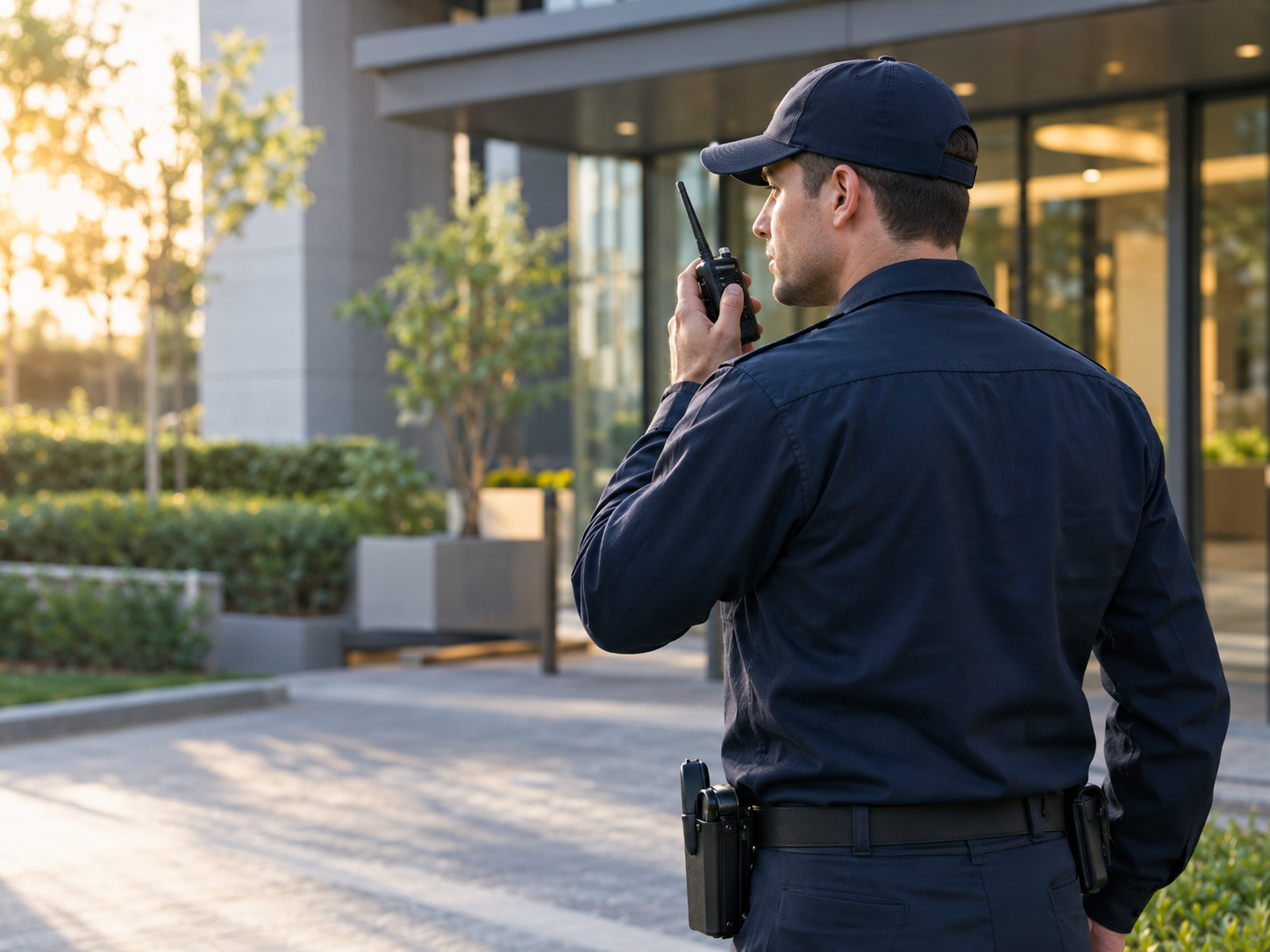
Hiring a security guard means giving someone responsibility for people, property, access control, sensitive information, and emergency situations. That makes Security Guard Background Verification an important part of the hiring process, particularly for apartments, offices, factories, warehouses, hospitals, retail establishments, and other facilities.
A proper screening process should go beyond simply checking an identity card. It can include identity and address verification, employment history, document checks, police or antecedent verification where applicable, reference checks, and assessment of the guard’s suitability for the assigned role. These checks are especially important when hiring security guard services Bangalore for residential, commercial, or industrial premises. In India, private security agencies operate within the regulatory framework established under the Private Security Agencies (Regulation) Act, 2005 (PSAR Act), with licensing and regulation involving state authorities.
For businesses and property managers, the goal is simple: deploy personnel whose identity, background, documentation, and suitability have been properly assessed before they are placed on duty.
What Is Security Guard Background Verification?
Security Guard Background Verification is the process of checking a security guard’s identity, documents, address, employment history, references, and relevant antecedents before deployment. The purpose is to reduce avoidable security risks and confirm that the individual meets the requirements of the assigned role.
The exact checks can vary according to the employer, job responsibilities, location, and applicable rules. A guard working at a residential community may undergo a different level of screening from someone assigned to a high-security industrial facility.
A professional verification process generally examines:
- Identity and personal information
- Current and previous addresses
- Government-issued documents
- Previous employment
- References, where applicable
- Police or antecedent verification
- Training and role suitability
- Medical or fitness-related requirements where relevant to the assignment
- Completeness and consistency of submitted information
The PSAR Act defines a private security guard as a person providing private security, with or without arms, to protect a person or property, and establishes a regulatory framework for private security agencies.
Why Is Background Verification Important for Security Guards?
Security personnel often have access to buildings, gates, visitor records, parking areas, warehouses, equipment, employees, residents, and other sensitive areas. A weak screening process can therefore create risks that extend beyond ordinary hiring mistakes.
Proper verification helps organisations:
- Confirm that the person is who they claim to be
- Identify inconsistencies in submitted information
- Establish employment and address history
- Support safer access-control operations
- Reduce avoidable hiring risks
- Maintain better personnel records
- Improve accountability within the security workforce
- Give property owners and managers greater confidence in deployment decisions
For organisations looking for professional security services Bangalore, background screening should be treated as part of the overall service process rather than as a one-time administrative formality.
What Documents Are Checked During Security Guard Verification?
The documents required can vary depending on the agency, assignment, and applicable local requirements. However, common security guard documents may include:
- Government-issued identity proof
- Address or residence proof
- Recent photographs
- Proof of age or date of birth
- Previous employment details
- Training or qualification records where applicable
- References or supporting employment information
- Police verification or antecedent-related documentation where required
The important point is not simply collecting copies. Information should be checked for consistency across documents and against the information provided by the candidate.
For example, if a guard provides one address during recruitment but different addresses appear across records, the discrepancy should be reviewed before deployment.
How Does the Security Guard Verification Process Work?
A well-organised security guard verification process usually follows several stages.
1. Collect Candidate Information
The agency first obtains the guard’s personal information, identification details, address history, employment information, photographs, and other required documents.
2. Verify Identity
The submitted identity information is checked against appropriate documents. Names, dates of birth, photographs, and other relevant details should be reviewed for inconsistencies.
3. Verify Address Details
Current and, where relevant, previous addresses may be reviewed to establish a reliable record of the individual’s residential history.
4. Conduct Police or Antecedent Verification
Police verification for security guards may be required depending on the applicable process and local requirements. This stage is intended to verify relevant antecedents through the appropriate authorities or prescribed process rather than relying solely on a self-declaration.
The regulatory framework for private security agencies is established nationally through the PSAR Act and associated rules, while state authorities have responsibilities relating to licensing and regulation.
5. Check Previous Employment
Where previous employment is relevant, the agency can review the candidate’s stated employment history and supporting information. This can help identify unexplained gaps or inconsistencies.
6. Review References
References can provide additional context about reliability, conduct, punctuality, and previous responsibilities. Reference checks should complement—not replace—document and official verification.
7. Complete Suitability Assessment
Finally, the agency should assess whether the guard is appropriate for the specific assignment. A candidate suitable for a residential gate may not automatically be suitable for a warehouse, corporate facility, or industrial site.
Police Verification vs. Document Verification
These checks are related but serve different purposes.
| Check | Main Purpose |
| Identity verification | Confirms the candidate’s identity |
| Address verification | Establishes residence information |
| Document verification | Checks submitted records and supporting documents |
| Employment verification | Reviews previous work information |
| Reference check | Provides additional employment or character context |
| Police/antecedent verification | Checks relevant records or antecedents through the applicable official process |
| Suitability assessment | Determines whether the guard fits the assigned role |
A complete screening system should use the checks appropriate to the assignment rather than treating one document or one verification step as sufficient.
What Safety Checks Should Employers Consider?
Background screening should be connected to the actual risks of the site.
For example, a commercial building may prioritise:
- Visitor management
- Access control
- Emergency response awareness
- Incident reporting
- Communication skills
A warehouse or industrial facility may require additional attention to:
- Restricted-area access
- Material movement
- Perimeter monitoring
- Shift discipline
- Emergency procedures
Residential communities may place greater emphasis on:
- Resident and visitor interaction
- Gate management
- Delivery monitoring
- Parking control
- Night-shift alertness
This is why verified security guards in Bangalore should be selected according to both their verified background and the requirements of the location where they will work.
Common Mistakes to Avoid During Security Guard Verification
Even organisations that perform basic screening can overlook important details.
Relying Only on Identity Proof
An identity document confirms identity-related information but does not by itself establish employment history, suitability, or all relevant antecedents.
Skipping Address Checks
Incomplete or inconsistent address information can make later verification more difficult.
Treating Police Verification as the Only Check
Police or antecedent verification is important where applicable, but it should not automatically replace identity, employment, document, and role-suitability checks.
Failing to Keep Records
Verification should be properly documented so that the organisation can demonstrate what was checked and when.
Using the Same Screening Standard for Every Site
Security requirements differ significantly between offices, apartments, factories, hospitals, warehouses, and other facilities. Screening should reflect the risk profile of the assignment.
How Can Businesses Choose a Reliable Security Agency?
When evaluating a security provider, businesses should look beyond the number of guards available.
Ask the agency about:
- Its applicable licensing and regulatory compliance.
- How candidate identities and documents are checked.
- How police or antecedent verification is handled.
- Whether employment history and references are reviewed.
- What training guards receive for the assigned role.
- How deployment records are maintained.
- How replacements and absenteeism are managed.
- How incidents are reported and escalated.
- Whether supervisors regularly monitor deployed personnel.
- Whether the screening process changes according to site-specific risks.
India’s PSAR Act requires private security agencies to hold the applicable licence to conduct private security agency business, and the framework includes requirements concerning antecedent verification.
For organisations comparing professional security services Bangalore, these questions can help distinguish a structured security operation from a provider that focuses only on manpower deployment.
Why Verification Should Continue After Hiring
Background screening should not be viewed as the end of security management.
Organisations should also maintain:
- Updated personnel records
- Attendance and deployment records
- Training records
- Incident reports
- Supervisor inspections
- Periodic performance reviews
- Clear procedures for reporting concerns
If a guard changes location, role, or responsibilities, the organisation should review whether additional checks or documentation are necessary.
This creates a more complete security management system rather than relying on a single verification event during recruitment.
Conclusion
Security Guard Background Verification is more than a document-collection exercise. A responsible screening process combines identity checks, document review, address and employment verification, applicable police or antecedent checks, references, and role-specific suitability assessment.
For businesses, residential communities, offices, warehouses, and industrial facilities, the right approach is to work with a security provider that treats verification as part of a broader security management system. Organisations should also confirm the current regulatory requirements applicable to their location and assignment, particularly because private security regulation involves state-level implementation under the national PSAR framework.
If your organisation is evaluating security manpower in Bangalore, PRKGlobal360 can help you assess security requirements and plan an appropriate deployment approach based on your facility, workforce, and operational needs.
Choose a Reliable Security Partner
Looking for reliable security personnel with proper verification and professional deployment? Connect with PRKGlobal360 to discuss your security requirements and find a suitable solution for your facility.
Call or WhatsApp: +91 96061 71055
Email: prkmanagement.blr@gmail.com
Frequently Asked Questions
What is checked during security guard background verification?
Typical checks can include identity documents, address details, employment history, references, police or antecedent verification where applicable, and suitability for the assigned role. The exact requirements can vary according to the agency, location, assignment, and applicable regulations.
Is police verification required for every security guard?
Requirements can depend on the applicable rules, state processes, agency procedures, and assignment. Police or antecedent verification is an important component of responsible screening, but organisations should confirm the current requirements applicable to their location and security arrangement rather than assuming one process applies everywhere.
What documents should a security guard provide?
Common records can include government identity proof, address information, photographs, age-related documentation, employment details, training records where applicable, and verification-related documents. The agency should check the information for consistency rather than simply collecting photocopies.
How long does security guard verification take?
The timeframe varies according to the type of checks required, the availability of documents, the verification process used, and the relevant authorities. Identity and document checks may be completed relatively quickly, while official police or antecedent verification can take longer.
Can businesses verify security guards themselves?
Businesses can perform certain employment and document checks themselves, but official verification requirements and processes may involve the relevant agency or authorities. Many organisations prefer working with a properly structured security provider that maintains recruitment, verification, training, supervision, and deployment processes.
Why is background verification important for apartment security?
Apartment security guards interact with residents, visitors, delivery personnel, vendors, and property staff while controlling access to the premises. Proper screening helps property managers establish a documented recruitment process and reduce avoidable risks associated with incomplete or unverified personnel information.
What should I ask a security agency before hiring guards?
Ask how the agency verifies identity, addresses, previous employment, police or antecedent information, training, and role suitability. Also ask about licensing, supervision, record keeping, replacement procedures, incident reporting, and how the agency handles site-specific security requirements.
 Chat on WhatsApp