

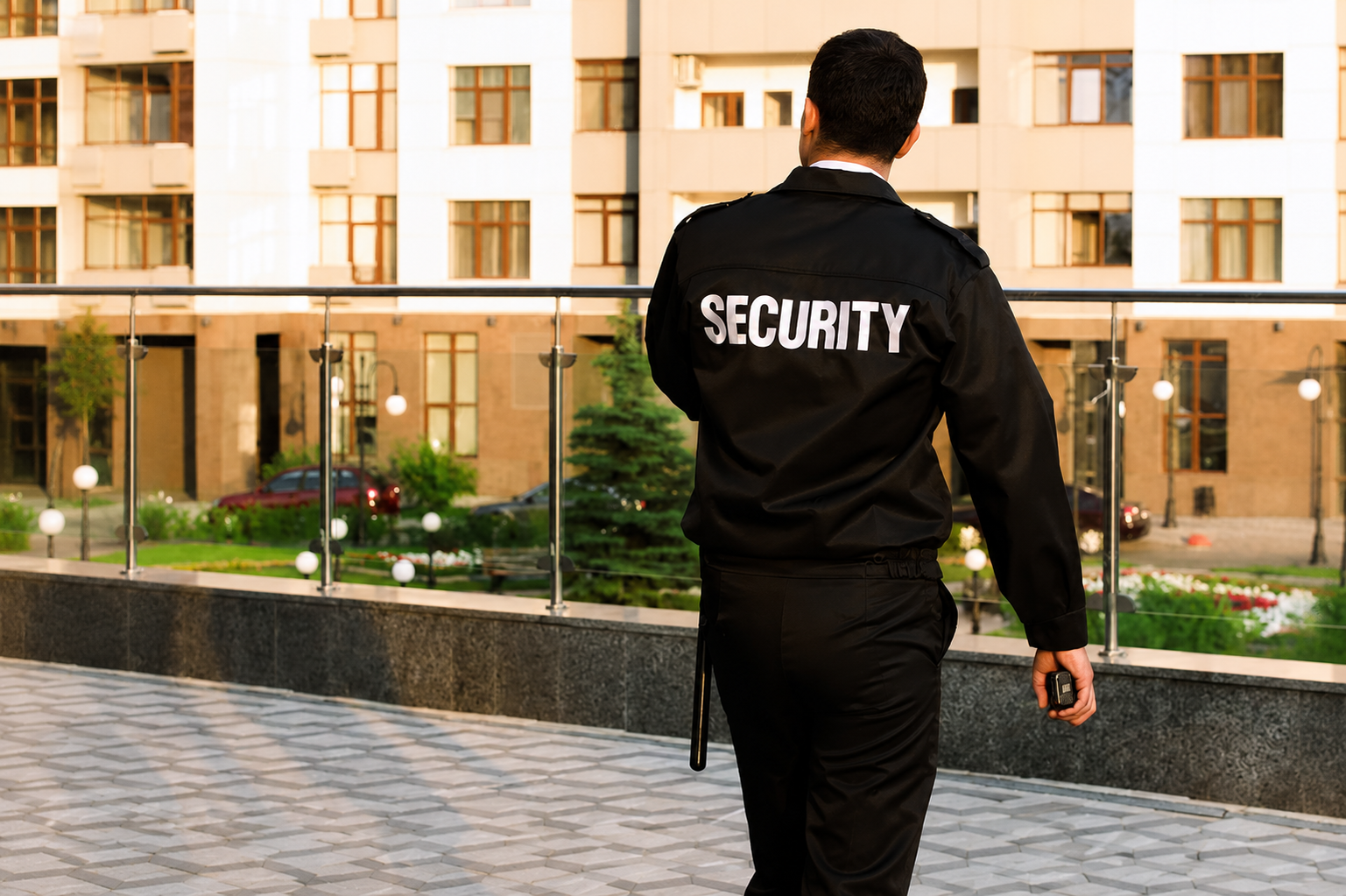
A security guard’s effectiveness depends on much more than physical presence. Security guard training develops the practical skills required to monitor premises, control access, respond to emergencies, communicate clearly and handle routine responsib
ilities professionally. For businesses, residential communities, offices, commercial buildings and industrial facilities, properly prepared guards can become an important part of an overall security plan.
In India, private security agencies operate under the Private Security Agencies (Regulation) Act, 2005 and related rules. The Ministry of Home Affairs has also notified the Private Security Agencies Central Model Rules, 2020, which superseded the earlier 2006 Model Rules. For organizations looking for reliable security guard services in Bangalore, choosing professionally trained guards who understand these regulatory requirements is essential.
A useful training programme should therefore combine regulatory requirements with practical workplace skills. This checklist explains the core abilities a professional guard should develop before and during deployment.
What Does Security Guard Training Include?
Security guard training includes instruction in physical fitness, observation, access control, emergency response, communication, security procedures, professional conduct and other duties relevant to the guard’s assignment. The exact training requirements can depend on applicable central and state rules, the role, and the type of site being protected.
The Ministry of Home Affairs states that the PSARA framework requires private security agencies to ensure prescribed training and skills for their private security guards and supervisors.
A practical programme should help guards understand not only what to do but also when, how and why a particular procedure should be followed.
Security Guard Training Checklist: 10 Essential Skills
A good security guard training checklist should cover the following areas.
1. Observation and Alertness
Observation is one of the most important security guard skills. Guards should learn to notice unusual behaviour, unattended objects, unauthorised movement, damaged locks, suspicious vehicles and other deviations from normal site activity.
Training should encourage guards to:
- Remain attentive during their shift
- Identify unusual activity without making assumptions
- Monitor entry and exit points
- Record relevant observations
- Report concerns through the correct chain of communication
Strong observation helps guards identify potential problems before they become larger incidents.
2. Access Control and Visitor Management
Access control is a daily responsibility at many offices, apartments, warehouses, hospitals, factories and commercial properties.
Guards should be trained to:
- Verify visitors according to site procedures
- Check identification when required
- Maintain visitor records
- Follow employee and contractor access protocols
- Monitor vehicle movement
- Prevent unauthorised entry
- Escalate access disputes appropriately
The objective is not simply to stop people from entering. It is to ensure that authorised people can enter efficiently while unauthorised access is identified and handled according to established procedures.
3. Communication Skills
Clear communication can prevent confusion during both routine operations and emergencies.
Professional security guard training should include verbal communication, basic written reporting and appropriate interaction with residents, employees, visitors, supervisors and emergency personnel.
Guards should be able to:
- Give clear instructions
- Communicate incidents accurately
- Maintain professional language
- Record important events
- Use radios or other communication equipment correctly
- Escalate serious situations without unnecessary delay
Good communication also reduces the risk of misunderstandings at busy security checkpoints.
4. Emergency Response
A guard may be among the first people to notice a fire, medical emergency, accident, security breach or other unexpected event.
Training should prepare guards to understand site-specific emergency procedures, including:
- Raising an alarm
- Contacting the appropriate emergency service
- Informing supervisors
- Guiding people towards designated safe areas
- Maintaining access for emergency responders
- Following evacuation procedures
- Recording the incident after immediate priorities are addressed
The guard’s role is generally to respond within their training and site procedures rather than attempt tasks beyond their competence.
5. Fire Safety Awareness
Basic fire-safety awareness is an important part of guarding many commercial and residential premises.
Guards should understand:
- Common fire hazards at their assigned location
- Alarm systems
- Emergency exits
- Evacuation routes
- Assembly areas
- How to report a fire
- The site’s procedures for using available fire-safety equipment
The level of practical training should reflect the site’s risk profile and applicable safety procedures.
6. First-Aid Awareness
Security personnel may encounter injuries or medical emergencies before professional medical help arrives.
Basic first-aid training can help guards understand how to respond safely while waiting for qualified medical assistance. Training should cover appropriate first response, emergency communication and avoiding actions that could worsen an injury.
For higher-risk workplaces, additional first-aid capabilities may be appropriate based on the site’s requirements.
7. Physical Fitness and Discipline
A guard may need to stand for long periods, patrol a large property, respond quickly to an incident or remain alert during extended shifts.
Physical fitness therefore supports effective performance. However, fitness alone does not make someone a professional guard.
Training should also reinforce:
- Proper uniform and appearance
- Punctuality
- Post discipline
- Alertness
- Responsible use of equipment
- Following assigned procedures
The MHA’s published materials on private security training have included physical fitness, proper conduct and uniform standards among training areas.
8. Report Writing and Record Keeping
Accurate records can be extremely valuable when reviewing an incident or understanding recurring problems.
Guards should know how to record:
- Visitor activity
- Vehicle movement
- Patrol observations
- Unusual incidents
- Shift handovers
- Maintenance or security concerns
- Emergency events
Reports should be factual, concise and based on observations rather than speculation.
9. Conflict Management and Professional Conduct
Security guards regularly interact with people in situations where emotions may be high. Training should therefore cover calm communication, de-escalation and appropriate escalation.
A guard should know when to:
- Listen and communicate calmly
- Avoid unnecessary confrontation
- Follow site rules
- Contact a supervisor
- Request appropriate assistance
- Record the incident
Professional conduct is especially important in residential communities, hospitals, offices and customer-facing environments.
10. Site-Specific Security Procedures
Not every security assignment is the same.
A residential community may require visitor verification and gate management, while a warehouse may place greater emphasis on vehicle movement, loading areas and inventory-related access. An office building may require reception security, employee access control and visitor coordination.
For this reason, general training should be followed by site-specific induction before deployment.
Why Ongoing Training Matters
Initial training provides the foundation, but skills can decline when they are not practised. Refresher sessions can help guards remain familiar with procedures, equipment and emergency protocols.
Ongoing training may focus on:
- Emergency drills
- Communication procedures
- Access-control updates
- Incident reporting
- New security equipment
- Site-specific risks
- Lessons from previous incidents
The MHA has stated that the 2020 Central Model Rules were introduced to strengthen regulation and training while also incorporating developments such as digital antecedent verification and alignment with the National Skill Qualification Framework.
How to Evaluate a Trained Security Guard
Businesses and property managers should look beyond appearance when assessing security personnel.
Useful evaluation areas include:
| Area | What to Assess |
| Alertness | Ability to notice unusual activity |
| Communication | Clear and professional interaction |
| Access control | Consistent application of procedures |
| Emergency response | Knowledge of escalation and site protocols |
| Reporting | Accurate and timely documentation |
| Conduct | Discipline, courtesy and professionalism |
| Site knowledge | Understanding of assigned responsibilities |
This approach helps organisations evaluate whether personnel are prepared for the actual demands of the site.
Common Mistakes in Guard Training
Some training programmes become less effective when they focus only on basic instructions.
Common problems include:
- Treating training as a one-time activity
- Giving generic training without site induction
- Neglecting communication skills
- Not practising emergency procedures
- Failing to review incident reports
- Assigning duties without clearly explaining escalation procedures
- Focusing only on physical presence rather than professional conduct
A stronger approach combines classroom learning, practical exercises, supervision and periodic refresher training.
What Should Businesses Look for in a Security Service Provider?
When selecting a security provider, businesses should evaluate the agency’s recruitment, verification, training, supervision and deployment processes.
Important questions include:
- How are guards screened before deployment?
- What initial training do they receive?
- Is site-specific induction provided?
- How are attendance and performance monitored?
- What is the process for handling incidents?
- Are supervisors available for escalation?
- How frequently are refresher sessions conducted?
- Does the agency follow applicable licensing and regulatory requirements?
For organisations looking for trained security guards in Bangalore, these factors can be particularly useful when comparing service providers rather than choosing solely on price.
Security Guard Training and the Role of Professional Agencies
A professional agency should treat guard deployment as an ongoing operational process rather than simply supplying personnel. Training, supervision, communication and performance monitoring all contribute to consistent service delivery.
For businesses, residential properties and commercial facilities, working with an experienced provider of security services in Bangalore can help create clearer processes for recruitment, deployment, site induction and supervision.
PRKGlobal360 can support organisations that require structured security solutions aligned with their site requirements and operational needs.
Conclusion
Effective security starts with preparation, not simply the presence of a guard at an entrance. A strong training programme develops observation, communication, access control, emergency response, reporting, discipline and site-specific knowledge. Businesses should also look at how an agency supervises personnel and maintains service quality after deployment.
For organisations seeking reliable security solutions, PRKGlobal360 can help assess site requirements and provide professionally managed security services. To discuss your requirements.
Call or WhatsApp: +91 96061 71055
Email: prkmanagement.blr@gmail.com
Frequently Asked Questions
What skills should a professional security guard have?
A professional guard should have strong observation, communication, access-control, reporting, emergency-response and conflict-management skills. Physical fitness, discipline and professional conduct are also important. The exact skill set should be adapted to the risks, responsibilities and procedures of the specific site where the guard is deployed.
How long does security guard training take in India?
Training duration can vary according to applicable rules, the guard’s role and the type of training involved. The Central Model Rules provide a framework for training private security personnel, while state-level implementation and requirements should also be considered. Agencies should verify current requirements applicable to their operations rather than relying on an outdated training schedule.
Is physical fitness enough to become a good security guard?
No. Physical fitness is only one part of effective guarding. A capable guard also needs observation, communication, access-control, reporting, emergency-response and professional conduct skills. Training should prepare personnel for the practical responsibilities of their assigned site rather than focusing only on physical ability.
Why is site-specific training important for security guards?
Every site has different access points, risks, emergency procedures, visitor policies and reporting structures. Site-specific induction helps guards understand exactly what is expected of them and how they should respond to common situations. It also reduces confusion when guards need to escalate an incident or coordinate with site management.
Do security guards need refresher training?
Refresher training is useful because procedures, equipment, site risks and operational requirements can change. Periodic drills and training sessions can also reinforce skills that may not be used frequently. Agencies and site managers should determine refresher requirements based on applicable regulations and the responsibilities of the assignment.
How can a business choose a trained security guard service?
Businesses should assess an agency’s recruitment and verification process, training approach, supervision, site induction, incident reporting and compliance practices. It is also useful to discuss the property’s specific risks before deployment. A provider should be able to explain how guards will be trained and supervised for the particular assignment.
Are security guard training requirements the same across India?
Not necessarily. The PSARA framework and Central Model Rules provide an important national framework, but implementation can involve state-specific rules and controlling authorities. The MHA notes that the 2020 Central Model Rules superseded the 2006 Model Rules and that adoption by states and UTs has progressed through their respective rules.
 Chat on WhatsApp