

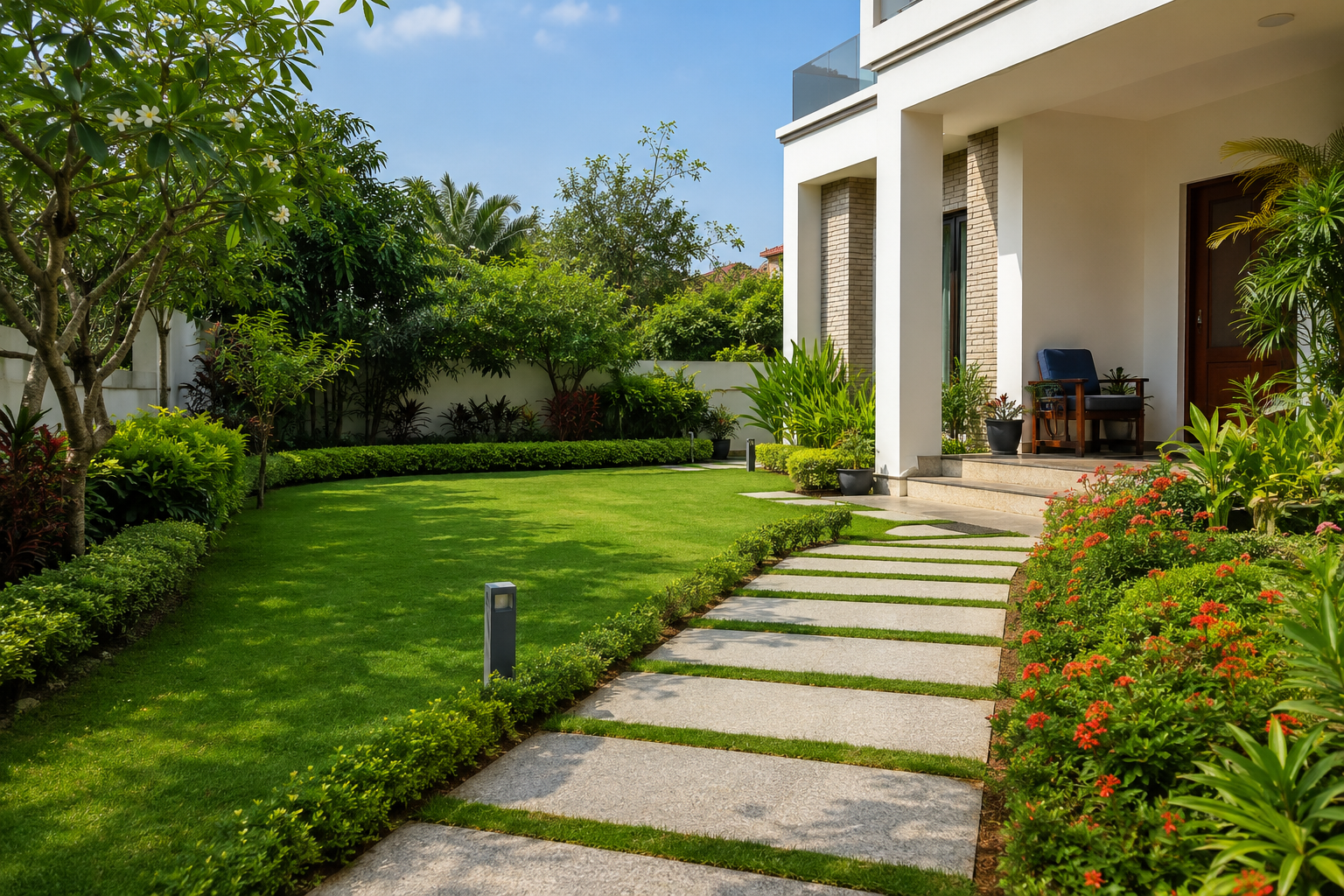
Residential landscaping should make everyday life at home more enjoyable. It can provide a place for morning tea, children’s activities, gardening, outdoor dining, exercise, quiet reading or simply a more welcoming entrance.
The right design depends on the property type, available area, sunlight, privacy, household routine and willingness to maintain the garden. A large lawn is not automatically better than a compact, well-planned courtyard. Similarly, a fashionable vertical garden is useful only when it has suitable light, irrigation, and maintenance access.
Professional residential landscaping services in Bangalore help homeowners turn these practical requirements into a coherent outdoor space.
Call or WhatsApp: +91 70739 69843
Start With How the Space Will Be Used
Before selecting plants or materials, list the activities the landscape should support.
Possible priorities include:
- Relaxation
- Outdoor dining
- Entertaining guests
- Children’s play
- Pet activity
- Gardening
- Growing herbs and vegetables
- Privacy
- Entrance improvement
- Shaded seating
- Yoga or exercise
- Low-maintenance greenery
Rank these requirements. A garden designed around actual household use is likely to remain useful for longer than one created only for photographs.
Residential Landscaping Ideas by Property Type
1. Apartment Balconies
Balconies require careful space management.
Useful ideas include:
- Railing planters where permitted
- Narrow planters along walls
- A compact herb section
- One focal plant instead of many small pots
- Foldable seating
- Wall-mounted shelves
- Lightweight containers
- Drip trays and controlled drainage
- Trellises for suitable climbers
Before installation, check building rules, structural restrictions, drainage and exposure to wind.
Avoid overcrowding the balcony. Plants need enough space for airflow, access and regular care.
2. Apartment Terraces
Private or common terraces can support more substantial greenery, but waterproofing, load, drainage and access must be reviewed.
Possible features include:
- Raised planting beds
- Container gardens
- Shaded seating
- Herb and vegetable areas
- Pergolas
- Walking paths
- Small lawns only where technically suitable
- Defined service routes
- Irrigation zones
Heavy materials and deep soil beds should not be installed without appropriate technical review.
3. Villa Front Gardens
The front garden creates the first impression of the home.
A practical design may include:
- Clear pathway to the entrance
- Layered planting
- One focal tree or feature
- Low planting near driveways
- Lighting
- Defined edges
- Space for vehicle movement
- Plants that do not block house numbers or security views
The entrance should remain easy to navigate during both dry and rainy conditions.
4. Villa Courtyards
Courtyards can become quiet extensions of indoor living areas.
Ideas include:
- A central tree
- Shaded seating
- Textured foliage
- A small water feature where maintenance is practical
- Stone or gravel surfaces
- Framed views from interior rooms
- Soft lighting
- Fragrant plants in selected areas
Plant choice should match the amount of light that reaches the courtyard.
5. Backyards
Backyards can support several uses when divided into zones.
A family backyard might include:
- Seating area
- Open play space
- Kitchen garden
- Utility screen
- Pet area
- Lawn or ground cover
- Storage access
- Trees positioned for shade
Avoid placing permanent features in locations that restrict plumbing, drainage or maintenance access.
6. Independent Houses With Larger Plots
Larger properties benefit from a structured master plan.
The design can divide the site into:
- Arrival landscape
- Formal garden
- Informal family garden
- Children’s area
- Kitchen garden
- Outdoor dining
- Quiet garden
- Utility and service zone
- Rainwater-management areas
- Tree belt or privacy planting
A master plan also allows the project to be implemented in phases without losing consistency.
Residential Landscaping Trends With Practical Value
Low-Maintenance Planting
Homeowners are increasingly prioritising plant combinations that do not require constant pruning, replacement or watering.
Low-maintenance does not mean maintenance-free. It means selecting plants and layouts that are appropriate for the site and household.
Reduced Lawn Areas
Lawns can be attractive, but they need regular mowing, edging, nutrition and irrigation. Some homeowners are reducing lawn area and combining it with ground covers, gravel, planting beds or paved seating.
Outdoor Rooms
Pergolas, decks, patios and shaded seating can make gardens more usable. These features should be positioned according to sun, privacy, access and views from the home.
Kitchen and Herb Gardens
Edible gardens can be integrated into balconies, terraces and ground-level landscapes.
Begin with a manageable area that has:
- Adequate light
- Water access
- Drainage
- Convenient harvesting
- Protection where necessary
- Space for soil care
Layered Planting
Layered planting combines trees, shrubs, ground covers and accent plants to create depth. It can also provide privacy and reduce the appearance of bare boundary walls.
Water-Conscious Irrigation
Different planting areas may require different watering methods. Grouping plants according to water needs can make irrigation more efficient and maintenance easier.
Multifunctional Spaces
A compact area can serve several purposes. A raised planter edge may also work as seating, while a pergola can support shade and selected climbers.
The objective is not to add as many features as possible, but to use limited space intelligently.
Plant-Selection Principles for Bangalore Homes
Do not select plants only from photographs.
Consider:
- Sunlight
- Shade
- Water availability
- Mature height and width
- Root growth
- Leaf fall
- Flowering pattern
- Pest susceptibility
- Maintenance
- Safety
- Container suitability
- Proximity to walls and paving
The planting plan should also account for how the garden will look as plants mature.
Designing for Children
A child-friendly garden should provide clear visibility and safe movement.
Consider:
- Non-slip paths
- Open play areas
- Rounded edges
- Avoiding thorny plants near play zones
- Avoiding plants known to be unsuitable for the intended use
- Shade
- Secure level changes
- Safe water-feature design
- Separation from service areas
The final plant selection should be reviewed according to the household’s specific requirements.
Designing for Pets
Pet-friendly landscaping may require:
- Durable ground surfaces
- Defined toilet areas
- Secure boundaries
- Shaded resting spaces
- Protection for delicate planting
- Avoidance of unsafe plant choices
- Easy-to-clean pathways
- Access to water
Discuss the type, size and habits of the pet during the design stage.
Privacy Landscaping
Privacy can be improved with:
- Layered shrubs
- Suitable screening plants
- Trellises
- Pergolas
- Offset seating
- Planting near boundary walls
- Strategic focal points
Do not create dense planting that blocks security views or makes maintenance difficult.
Lighting for Residential Gardens
Outdoor lighting should support safe movement and comfortable use.
A plan may include:
- Entrance lights
- Step lighting
- Path lighting
- Seating-area lighting
- Feature lighting
- Service-area lighting
Avoid excessive brightness. Fixtures should be accessible for maintenance and coordinated with irrigation.
Planning the Maintenance Level
Every residential landscape should be designed for a realistic maintenance commitment.
Lower-Maintenance Landscape
May use:
- Limited lawn
- Hardy plant groups
- Simple bed shapes
- Mulched planting areas
- Automated irrigation where suitable
- Fewer seasonal plants
- Accessible maintenance routes
Higher-Detail Landscape
May include:
- Extensive lawn
- Formal hedges
- Seasonal flower beds
- Specialised plants
- Water features
- Detailed topiary
- Frequent grooming
The homeowner should understand the ongoing care requirement before approving the design.
Residential Landscaping Budget Factors
The cost depends on:
- Site size
- Existing condition
- Soil and drainage work
- Hardscape
- Plant size
- Irrigation
- Lighting
- Structures
- Access
- Labour
- Maintenance
- Project phasing
Ask for separate costs for essential infrastructure, planting and optional features. This makes it easier to adjust the project without compromising drainage or basic preparation.
A Room-by-Room Outdoor Planning Method
Treat each outdoor area like a room.
For every zone, decide:
- Primary purpose
- Users
- Required furniture
- Planting character
- Light conditions
- Privacy
- Movement
- Watering
- Maintenance access
- Night-time use
This method produces a more coherent landscape than selecting independent features.
How Residential Landscaping Services Work
A professional project may follow:
- Consultation
- Site inspection
- Measurement
- Lifestyle brief
- Concept design
- Budget review
- Plant and material selection
- Development
- Establishment care
- Ongoing maintenance
The homeowner should approve the design and scope before installation begins.
PRKGlobal360 Residential Landscaping Services
PRKGlobal360 can support residential landscaping for apartments, villas, independent homes, courtyards, balconies and terraces in Bangalore.
The scope may include:
- Site assessment
- Design planning
- Landscape development
- Planting
- Irrigation
- Lawn development
- Terrace and balcony greenery
- Garden maintenance
- Indoor plant care
Recommendations should be customised to the property, household and expected maintenance level.
Conclusion
Residential landscaping is most successful when it reflects the way a family actually lives.
A well-planned outdoor space does not need to be large or filled with expensive features. It needs appropriate zoning, suitable plants, safe movement, manageable maintenance and a clear connection with the home.
Property owners considering residential landscaping services in Bangalore should begin by defining their lifestyle requirements and maintenance expectations. A professional team can then translate those priorities into a practical design.
Contact PRKGlobal360 to discuss landscaping ideas for your balcony, terrace, villa, courtyard or independent home.
If you’re ready to transform your outdoor space, now is the perfect time to consult professionals who specialize in Residential Landscaping Services in Bangalore and bring your garden vision to life. Explore More to find the right team for your project today.
Transform Your Home with Beautiful, Custom Landscapes
Dreaming of a stunning garden, elegant entrance, relaxing rooftop retreat, or a low-maintenance outdoor space? Our expert landscaping team creates personalized residential landscapes designed to complement your lifestyle, preferences, and budget.
From creative concept planning and plant selection to professional execution and ongoing maintenance, we take care of every detail to turn your outdoor vision into a beautiful reality.
Call or WhatsApp: +91 70739 69843
Email: sales@parthsarthigroup.com
Get in touch today and discover how professional Residential Landscaping Services in Bangalore can turn your outdoor space into a refreshing green sanctuary.
Frequently Asked Questions
Which landscaping option is suitable for a small Bangalore home?
Container planting, compact seating, wall-supported greenery and carefully selected focal plants can work well where space is limited.
Is a lawn necessary in a residential garden?
No. Ground covers, planting beds, gravel, paving and seating areas can create an attractive garden without a large lawn.
Can a terrace be converted into a garden?
Potentially, but waterproofing, drainage, load, wind and access should be evaluated before installation.
How can I reduce garden maintenance?
Limit lawn and seasonal planting, group plants by care requirements, simplify bed shapes and provide practical irrigation and maintenance access.
Can landscaping be completed in phases?
Yes. Begin with drainage, irrigation, main pathways and structural planting, then add optional features according to budget.
 Chat on WhatsApp