

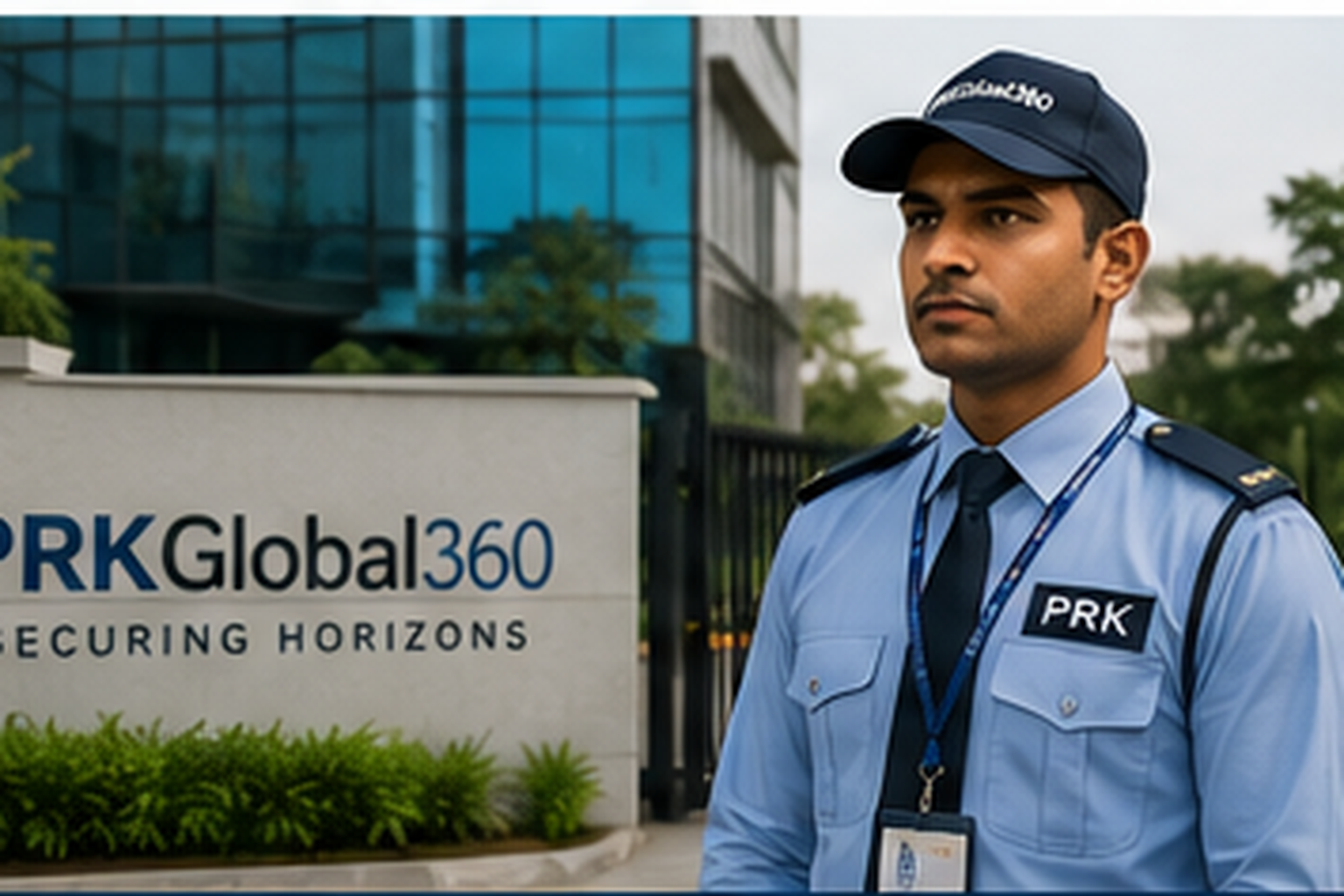
Security is no longer limited to placing guards at an entrance. Modern facilities need a coordinated approach that combines manned guarding, surveillance, access control, visitor management, patrolling, emergency response and digital monitoring. The right security model should protect people and assets while also supporting smooth day-to-day operations.
Security services by PRKGlobal360 are positioned around this integrated approach, combining physical security personnel with electronic security measures for corporate offices, industrial facilities, residential communities and other managed properties.
For facility heads, administration teams, procurement managers and property managers, the key question is not simply how many guards are required. It is whether the security provider understands the facility’s risks, designs an appropriate deployment plan, maintains operating procedures and provides sufficient supervision and reporting.
This guide explains how integrated security works, what services can be included, how to evaluate a security agency, what PSARA means, the factors that influence cost and how manned and electronic security can work together.
What Are Integrated Security Services?
Integrated security services combine people, processes and technology into one coordinated security framework. Instead of treating guards, CCTV cameras, access control and emergency procedures as separate functions, an integrated model connects them around a common security plan.
A typical integrated security programme may include:
- Trained security guards and supervisors
- Gate and access management
- Visitor registration and verification
- CCTV surveillance
- E-surveillance and remote monitoring
- Access control systems
- Vehicle movement management
- Patrolling and perimeter checks
- Incident reporting
- Emergency response procedures
- Security audits and threat assessments
- Security SOPs and post instructions
- Command-centre or control-room support where required
The exact combination depends on the property, operating hours, workforce, entry points, assets, location, threat profile and regulatory requirements.
The goal is straightforward: detect risks early, control access, respond quickly and maintain accountability throughout the security operation.
Why Modern Facilities Need More Than Manned Guarding
Manned guarding remains an important part of physical security because trained personnel can observe situations, communicate with occupants, verify people and vehicles, enforce site procedures and respond to incidents.
However, guards have limitations. A large facility may have multiple entry points, blind spots, restricted areas and long operating hours. Technology can help provide additional visibility and create records that support security operations.
For example, consider an industrial facility with three vehicle gates and several restricted production areas. A guard may control a gate, while CCTV can monitor surrounding zones. Access control can restrict entry to authorised personnel, and a supervisor can review incidents or unusual activity.
This creates multiple layers of protection instead of relying on a single control.
A practical security architecture can therefore look like:
People → Procedures → Technology → Monitoring → Response → Reporting
Each layer supports the others.
What Is Included in Professional Security Services?
Professional security services normally combine several operational functions rather than simply supplying guards.
1. Manned Guarding
Manned guarding provides a physical security presence at locations where access control, observation and immediate response are required.
Depending on the facility, guards may be assigned to:
- Main gates
- Reception areas
- Loading and unloading zones
- Parking areas
- Perimeter points
- Residential entrances
- Commercial premises
- Warehouses
- Industrial plants
- Construction sites
The number and positioning of personnel should ideally be based on a documented security deployment plan, rather than a standard guard-to-area ratio.
2. Security Supervisors
Supervisors provide operational oversight between guards and the security management team.
Their responsibilities may include:
- Checking attendance and deployment
- Inspecting security posts
- Reviewing shift handovers
- Monitoring adherence to SOPs
- Conducting patrol checks
- Recording incidents
- Coordinating emergency responses
- Communicating with facility management
- Escalating serious issues
Supervision is particularly important for large campuses where several security posts operate simultaneously.
3. Gate Management
The entrance is often the first security control point at a facility.
Effective gate management can involve:
- Identity verification
- Employee access checks
- Visitor registration
- Vehicle checks
- Delivery verification
- Material movement records
- Contractor management
- Entry and exit logging
- Restricted-area controls
The process should be designed so that security requirements do not unnecessarily disrupt legitimate movement.
4. Visitor Management
Visitor management systems can help facilities record who enters the premises, why they are visiting and which employee or department is receiving them.
Depending on the technology deployed, visitor management may include:
- Pre-registration
- ID verification
- Digital visitor passes
- Host notification
- Entry and exit records
- Badge management
- Visitor history
This is useful for corporate offices, residential communities, healthcare facilities, campuses and industrial sites.
5. Patrolling and Perimeter Security
Patrolling adds another layer of physical protection, particularly for facilities with large outdoor areas.
Patrolling schedules can cover:
- Boundary walls
- Parking areas
- Storage zones
- Utility areas
- Fire exits
- Remote sections
- Loading bays
- Construction areas
Patrol activities should ideally be documented through logs, checklists or digital reporting so management can verify that scheduled inspections are actually being completed.
How CCTV and Access Control Strengthen Manned Security
CCTV and access control should not necessarily be viewed as replacements for guards. In many facilities, they work best as complementary controls.
CCTV can provide visual monitoring, while guards interpret events, verify situations and take action according to site procedures.
Access control can restrict entry to approved people, while security personnel manage exceptions, visitors and physical verification.
This combination creates a more structured security environment.
CCTV Surveillance
A CCTV system may support:
- Entrance monitoring
- Perimeter observation
- Parking surveillance
- Critical-area monitoring
- Incident review
- Remote observation
- Evidence preservation, subject to applicable policies and law
Camera placement is important. Installing more cameras does not automatically mean better security. Cameras should be positioned according to risk, visibility, lighting, entry points and operational requirements.
Access Control
Access control systems can help restrict movement into designated areas.
Common technologies include:
- RFID cards
- Proximity cards
- Biometric systems
- PIN-based access
- Mobile credentials
- Turnstiles
- Door controllers
The appropriate solution depends on the facility’s security requirements, workforce size and existing infrastructure.
E-Surveillance
E-surveillance can extend monitoring beyond physical security posts by allowing designated personnel to monitor events through electronic systems.
This can be particularly useful for facilities that need monitoring across multiple locations or areas that are difficult to observe continuously through physical patrols alone.
The effectiveness of e-surveillance depends on camera coverage, connectivity, monitoring procedures, escalation protocols and the ability to respond when an event is detected.
How Security Services by PRKGlobal360 Can Be Structured
A facility should not receive a generic security package without first understanding its operational environment.
A structured deployment can begin with a site assessment and progress through several stages.
Step 1: Understand the Facility
The security team reviews:
- Site layout
- Entry and exit points
- Operating hours
- Workforce movement
- Visitor traffic
- Vehicle movement
- Critical assets
- Restricted areas
- Existing security systems
- Previous incidents or known vulnerabilities
Step 2: Conduct a Threat Assessment
The objective is to identify what could go wrong and where the facility is most exposed.
Potential considerations include:
- Unauthorised access
- Theft
- Trespassing
- Tailgating
- Material movement risks
- Perimeter breaches
- Workplace incidents
- Fire and emergency situations
- Crowd or visitor-management issues
Not every facility has the same risk profile, so the resulting controls should be site-specific.
Step 3: Create a Security Deployment Plan
The provider can then determine:
- Number of personnel
- Post locations
- Shift structure
- Supervisor requirements
- Patrol routes
- Access-control responsibilities
- Monitoring requirements
- Reporting procedures
- Escalation hierarchy
Step 4: Establish SOPs
Standard operating procedures should explain how guards and supervisors are expected to handle routine and unusual situations.
Examples include:
- Visitor entry
- Vehicle entry
- Contractor access
- Material movement
- Lost property
- Fire alarms
- Suspicious activity
- Medical emergencies
- Security incidents
- Shift handovers
Step 5: Monitor and Improve
Security should not be treated as a one-time installation.
Management can periodically review:
- Incident records
- Attendance
- Patrol completion
- Access violations
- CCTV observations
- Response times
- Visitor patterns
- Security complaints
- Compliance with SOPs
The findings can then be used to adjust the deployment.
Benefits of Integrated Security for Corporate Facilities
Corporate environments often have a mixture of employees, visitors, contractors, vendors and service providers.
Corporate security services can help manage this movement while protecting people, information, equipment and premises.
An integrated approach may support:
- Controlled employee and visitor access
- Reception security
- Parking management
- Restricted-area access
- CCTV monitoring
- Emergency coordination
- Incident documentation
- Vendor and contractor control
For corporate facilities, the security function should ideally remain professional and service-oriented. Guards are often the first point of contact for visitors, making communication and conduct important parts of the overall experience.
Security Requirements for Industrial Facilities
Industrial environments can present different security challenges because they may include warehouses, production areas, heavy vehicles, raw materials, finished goods, utilities and large perimeters.
Industrial security services may therefore require greater emphasis on:
- Vehicle gate control
- Material movement
- Perimeter patrols
- Warehouse access
- Contractor verification
- Restricted production areas
- Loading and unloading zones
- Visitor management
- Emergency coordination
Industrial security also needs to work alongside operational procedures. Security personnel should understand the site’s access rules and escalation procedures without interfering unnecessarily with production activities.
Where fire and life safety are involved, security teams should understand their role within the site’s broader emergency plan. The National Building Code of India includes provisions relating to fire prevention, life safety and fire protection, including evacuation, firefighting installations and emergency-related measures.
Current Challenges Facing Facility & Security Decision-Makers
| Challenge | Business Impact |
| High guard attrition and absenteeism | Unmanned posts, inconsistent service quality |
| Untrained or unverified personnel | Safety risk, legal exposure, poor incident handling |
| Fragmented vendors (guarding, CCTV, access control separate) | No single accountability, coordination failures |
| Paper-based reporting | No audit trail, no data for decisions, disputes on incidents |
| Statutory non-compliance by agencies | Principal-employer liability, penalties, contract risk |
| No measurable SLAs or KPIs | Impossible to evaluate performance objectively |
| Rising costs without visible value | Budget pressure, difficult renewals |
| Emergency preparedness gaps | Delayed response to fire, medical, or intrusion events |
Residential Security Services for Apartments and Communities
Residential properties have a different security environment because the objective is not only protecting assets but also supporting the safety and convenience of residents.
Residential security services may include:
- Main-gate security
- Resident verification
- Visitor management
- Delivery management
- Vehicle access
- Parking monitoring
- CCTV surveillance
- Perimeter patrols
- Housekeeping and service-worker entry control
- Emergency response coordination
For apartment associations and RWAs, clear procedures are especially useful. A visitor policy should define how guests, delivery personnel, domestic workers, contractors and temporary workers are handled.
The system should balance security with resident convenience. Excessively complicated procedures can encourage people to bypass them, while overly relaxed controls can create avoidable vulnerabilities.
What Is a PSARA Licence and Why Does It Matter?
The Private Security Agencies (Regulation) Act, 2005, commonly referred to as PSARA, provides the legal framework for regulating private security agencies in India. India Code identifies the Act as Act No. 29 of 2005, with enforcement beginning in March 2006.
The Ministry of Home Affairs states that PSARA licensing is handled by Controlling Authorities appointed by State or UT Governments. Its official FAQ also explains that licences can cover a district, multiple districts or an entire state, depending on the licence granted.
For a buyer evaluating a PSARA licensed security agency, verification should form part of the vendor-selection process.
Ask the provider for relevant documentation and confirm:
- Applicable licence details
- Area of operation
- Validity
- Training arrangements
- Guard verification procedures
- Contractual responsibilities
- Insurance and statutory compliance, where applicable
The Ministry of Home Affairs also publishes the PSARA Act, rules and related material through its official resources.
How Much Do Security Guard Services Cost in Bangalore?
There is no single universal price for security guard services in Bangalore because the cost depends on the scope and operating conditions of the assignment.
Important cost factors can include:
- Number of guards
- Number of shifts
- Number of posts
- Supervisor requirements
- Site size
- Working hours
- Security risk
- Skill requirements
- Uniform and equipment
- CCTV monitoring requirements
- Access-control integration
- Reporting requirements
- Statutory and employment-related costs
- Additional technology or response services
A lower quotation is not automatically a better security solution.
For procurement teams, comparing proposals on a like-for-like basis is more useful. One agency may quote only for guards, while another may include supervision, reporting, technology support and additional controls.
Before comparing prices, define the scope clearly.
How to Choose a Security Agency for Your Company
Selecting a security provider should involve more than checking the quoted monthly rate.
1. Check Regulatory Compliance
Confirm whether the agency has the appropriate licence and documentation for the proposed area and scope of operations.
2. Evaluate Recruitment and Verification
Ask how guards are recruited, verified, trained and deployed.
Background verification and documented personnel records are important components of a responsible security programme.
3. Review Training
Ask whether personnel receive appropriate training for:
- Access control
- Emergency response
- Incident reporting
- Communication
- Fire response
- Visitor management
- Patrolling
- Site-specific SOPs
The Ministry of Home Affairs has published the Private Security Agencies Central Model Rules, 2020 and guidance concerning training institutes under the PSAR framework.
4. Assess Supervision
A provider should explain who supervises guards, how often sites are inspected and how management receives reports.
5. Examine Technology Capabilities
If the facility already has CCTV, access control or other electronic systems, ask how the proposed security operation will use them.
6. Review Reporting
Good reporting creates accountability.
Useful reports can include:
- Daily occurrence reports
- Incident reports
- Patrol reports
- Attendance reports
- Visitor records
- Access violations
- Equipment issues
- Supervisor inspection reports
7. Ask for a Site-Specific Proposal
The proposal should demonstrate that the provider understands the property.
A generic proposal with only a manpower count may not provide enough information for an informed decision.
Common Mistakes When Hiring Security Services
Several procurement mistakes can reduce the effectiveness of an otherwise reasonable security plan.
Choosing Only on Price
A very low quote may not reflect the full operational requirements. Compare manpower, supervision, technology, training, reporting and compliance requirements together.
Using the Same Deployment Everywhere
A corporate office, apartment complex and manufacturing plant do not have identical risks.
Security should be tailored to the site.
Ignoring Supervisory Controls
Even trained guards need clear supervision, escalation channels and performance monitoring.
Treating CCTV as a Complete Security Solution
Cameras can record and monitor events, but someone still needs to interpret alerts, verify incidents and follow the appropriate response procedure.
Failing to Update SOPs
Facilities change. New gates may open, layouts may change, contractors may increase and new risks may emerge.
Security procedures should therefore be reviewed periodically.
Poor Handover Between Shifts
Important information can be lost when outgoing and incoming teams do not communicate properly.
A structured shift-handover process helps maintain continuity.
What Should a Security Audit Cover?
A security audit should examine how well the existing security controls address the facility’s actual risks.
Depending on the property, an audit may examine:
- Entry and exit controls
- Guard deployment
- Visitor management
- Vehicle movement
- Perimeter protection
- CCTV coverage
- Access-control systems
- Lighting
- Emergency exits
- Incident records
- Patrol procedures
- SOP compliance
- Supervisor inspections
- Communication systems
- Emergency response procedures
The result should ideally identify gaps and prioritise corrective actions.
For example, an audit might discover that a facility has adequate CCTV at the main gate but poor coverage near a warehouse entrance. The solution may not be more guards; it could involve repositioning cameras, improving access control or changing patrol routes.
How Technology Is Changing Security Operations
Technology is increasingly becoming part of routine security management.
Modern security operations may use:
- Digital visitor management
- Biometric access
- RFID access cards
- Mobile patrol verification
- Digital incident reporting
- CCTV analytics
- Remote monitoring
- Electronic attendance systems
- Centralised dashboards
- Digital shift handovers
The purpose of technology should be practical. A complicated system that nobody uses correctly can create less value than a simpler system with strong operational discipline.
The Ministry of Home Affairs has noted that the Private Security Agencies Central Model Rules, 2020 incorporate technological developments and digital processes, including digitalisation and electronic payment, alongside other changes in the private security ecosystem.
Security and Fire & Life Safety Should Work Together
Security personnel are often present when an emergency occurs, so they can have an important operational role in evacuation, access control and coordination.
However, security teams should operate according to the property’s formal emergency and fire-safety procedures rather than improvising during an incident.
Relevant planning may include:
- Emergency contact lists
- Evacuation routes
- Assembly points
- Fire-alarm response
- Emergency vehicle access
- Crowd control
- Gate access for responders
- Incident communication
The National Building Code of India 2016 addresses fire prevention, life safety and fire protection, including evacuation, exits, fire protection systems and fire command functions.
For facility managers, this means security planning should be coordinated with the wider emergency-management framework.
A Practical Security Deployment Checklist
Before finalising a security provider, facility teams can review the following:
- Define the property’s security objectives.
- Map all entrances and exits.
- Identify critical assets and restricted areas.
- Review existing CCTV and access-control infrastructure.
- Determine guard and supervisor requirements.
- Define visitor and contractor procedures.
- Establish patrol routes.
- Prepare site-specific SOPs.
- Confirm escalation procedures.
- Verify applicable licensing and compliance documentation.
- Define reporting requirements.
- Establish performance-review procedures.
- Schedule periodic security audits.
This creates a more objective basis for comparing vendors.
What Makes an Integrated Security Model Effective?
An integrated security model works best when four elements remain aligned:
People
Security personnel need appropriate recruitment, training, deployment and supervision.
Processes
SOPs should define what personnel are expected to do in routine and emergency situations.
Technology
CCTV, access control, visitor management and monitoring systems should support actual operational requirements.
Management
Facility leadership needs visibility into incidents, performance, compliance and recurring security gaps.
If one element is weak, the overall system can suffer.
For example, advanced CCTV equipment will have limited operational value if cameras are poorly positioned or nobody reviews incidents. Similarly, well-trained guards may struggle if there are no clear procedures for visitor verification or emergency escalation.
When Should a Facility Consider Integrated Security?
An integrated approach can be particularly useful when a facility has:
- Multiple entry points
- High visitor movement
- Large perimeters
- Multiple shifts
- Valuable equipment or materials
- Restricted areas
- Large employee populations
- Existing CCTV infrastructure
- Multiple buildings
- Complex vehicle movement
- A need for documented security reporting
It may also be useful when a facility is replacing fragmented vendors and wants a more coordinated security operation.
Why a Site Survey Matters Before Deployment
A site survey allows a provider to understand the physical and operational characteristics of the property before proposing a security model.
During a site survey, the team can review:
- Number and location of gates
- Pedestrian movement
- Vehicle movement
- Perimeter conditions
- Existing cameras
- Lighting
- Blind spots
- Restricted areas
- Visitor flow
- Security-post locations
- Emergency access
- Existing SOPs
The resulting observations can then be used to build a more practical deployment plan.
For procurement teams, this also makes proposals easier to compare because the vendors are responding to a defined site rather than making assumptions.
Security Services by PRKGlobal360 for Different Facility Types
The security model should vary according to the operational environment.
For corporate properties, the focus may be on employee and visitor access, reception security, CCTV, restricted areas and professional front-of-house interaction.
For industrial properties, security may place greater emphasis on perimeter protection, vehicle gates, material movement, warehouses, production areas and emergency procedures.
For residential communities, visitor management, resident access, delivery handling, vehicle control and community-facing security become more important.
This is why security services by PRKGlobal360 can be evaluated as an integrated service model rather than simply a manpower-supply arrangement. The relevant question for a buyer is whether the proposed service can be adapted to the facility’s specific risks, operating model and technology environment.
PRKGlobal360’s Approach
| Timeline | Activities |
| Week 1 — Security Risk Assessment | Mapping of entry and exit points, review of CCTV coverage, post-wise threat assessment, and identification of gaps in existing security SOPs. |
| Weeks 2–3 — Redesign and Mobilization | Development of a revised security deployment plan with balanced day and night staffing, documented post instructions, digital visitor management at the main gate, QR-based patrol checkpoints across the perimeter and basement areas, Surveillance and Monitoring Services in Bangalore, and a CCTV monitoring protocol supported by daily camera health checks. |
| Week 4 Onward — Operations and Governance | Deployment of a trained security team under supervisor oversight, supported by monthly MIS reporting, performance reviews, incident tracking, and quarterly emergency drills. |
Conclusion
Effective facility security depends on more than having people at the gate. A well-designed security programme connects trained personnel, clear procedures, supervision and appropriate technology to the actual risks of the property.
For corporate offices, industrial facilities and residential communities, the right combination may include manned guarding, CCTV, access control, visitor management, patrolling, e-surveillance and documented emergency procedures.
When evaluating security services by PRKGlobal360, facility teams should focus on site-specific planning, applicable regulatory compliance, personnel quality, supervision, technology integration and measurable reporting. A site survey can be a practical first step toward identifying security gaps and developing an appropriate deployment plan.
Request a Free Security Assessment
If your facility is reviewing its current security arrangements, a site assessment can help identify operational gaps and determine which combination of manpower, monitoring and electronic controls is appropriate.
Talk to a Security Expert Today
Call or WhatsApp: +91 96061 71055
🌐 https://www.prkglobal360.in / www.prkglobal360.com
Frequently Asked Questions
What is included in professional security services?
Professional security services can include manned guarding, security supervision, gate management, visitor management, patrolling, CCTV monitoring, access control, incident reporting and emergency-response support. The exact scope depends on the facility’s size, operating hours, risks, number of entry points, assets and existing security infrastructure.
What is integrated security?
Integrated security combines personnel, procedures and technology into one coordinated security framework. Instead of operating guards, CCTV, access control and visitor management independently, the systems are planned together so that each supports detection, access management, monitoring, response and reporting.
What is a PSARA licence and why does it matter?
PSARA refers to the Private Security Agencies (Regulation) Act, 2005, which regulates private security agencies in India. Licensing is handled by designated Controlling Authorities at the State or UT level. Buyers should verify the relevant licence and its applicable area before appointing a private security agency.
How much do security guard services cost in Bangalore?
Security costs in Bangalore vary according to manpower, shifts, site size, risk level, supervision, training, equipment, technology and statutory requirements. The most useful way to compare quotations is to provide every agency with the same scope and then compare manpower, supervision, technology, reporting and compliance—not just the headline price.
How do I choose a security agency for my company?
Start by defining your site’s risks and security requirements. Then verify applicable licensing, recruitment and verification procedures, training, supervision, technology capabilities, reporting processes and emergency procedures. Request a site-specific deployment plan and compare proposals against the same scope before making a decision.
Can CCTV replace security guards?
CCTV generally should not be viewed as a complete replacement for physical security. Cameras provide monitoring and recording capabilities, while trained personnel can verify events, manage access, communicate with occupants and take action according to site procedures. In many facilities, CCTV and manned guarding are more effective when used together.
Why is a security site survey important?
A site survey helps identify entry points, blind spots, critical areas, visitor flows, perimeter conditions, existing technology and operational risks. These findings help determine guard deployment, patrol routes, access controls and monitoring requirements, reducing the risk of using a generic security plan that does not fit the property.
 Chat on WhatsApp