

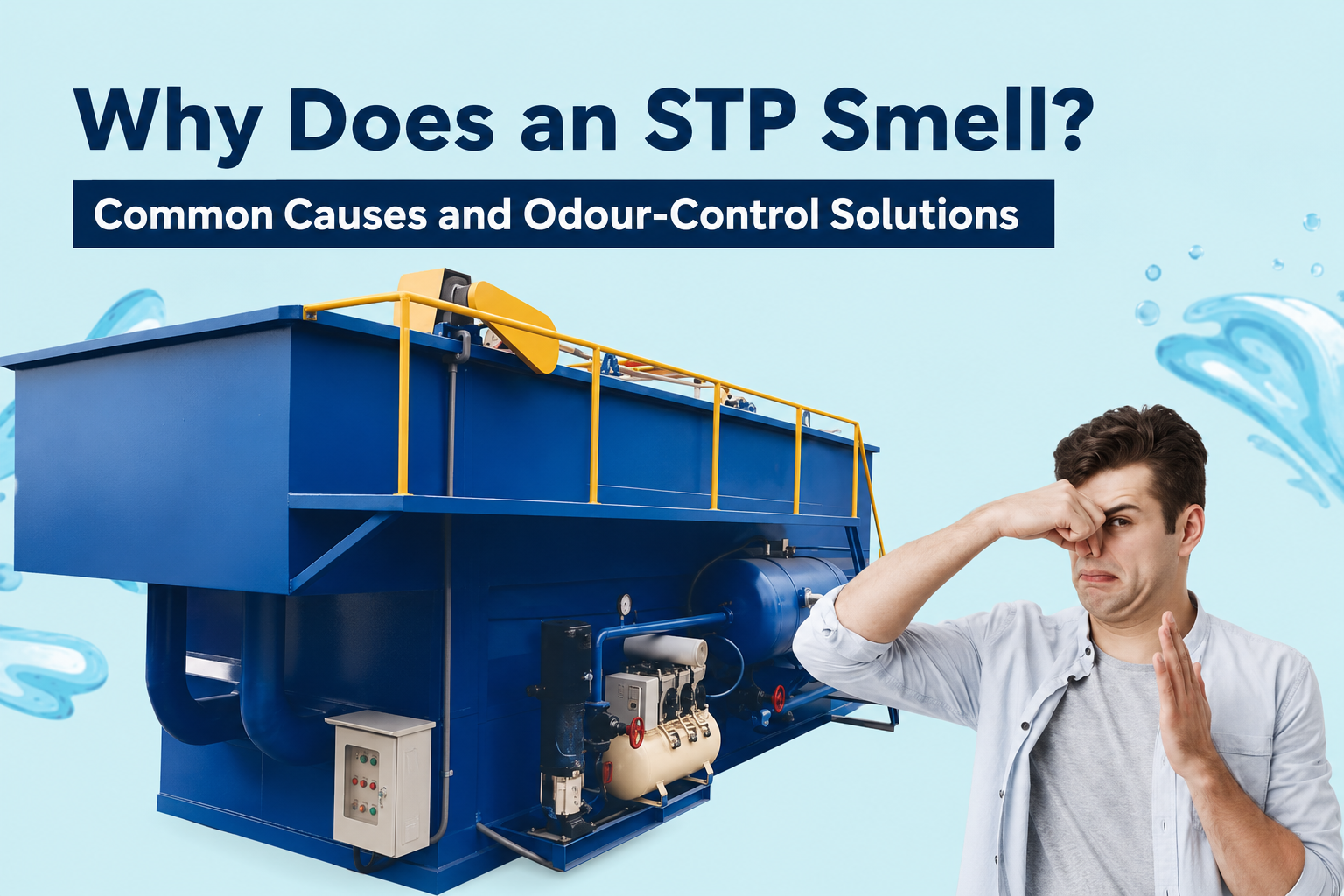
A STP smell problem usually indicates that something within the sewage treatment process is not operating under the right biological or mechanical conditions. Foul odours can develop because of low dissolved oxygen, stagnant sewage, excess sludge, poor aeration, organic overloading, or inadequate cleaning of treatment units. Hydrogen sulfide is one of the major compounds associated with the characteristic rotten-egg smell found around wastewater systems.
For apartment complexes, commercial buildings, institutions, hotels and industrial facilities, persistent odour is more than a nuisance. It can affect occupants, indicate poor plant operation and sometimes point to an underlying maintenance issue. Understanding the source helps operators take corrective action instead of simply masking the smell. Regular STP Maintenance Services in Bangalore can help identify operational problems, maintain treatment efficiency, control odour and ensure the sewage treatment plant continues to function reliably.
Call or WhatsApp: +91 96061 71055
What Causes an STP Smell Problem?
The most common reason is the development of anaerobic or septic conditions, where microorganisms break down organic matter without sufficient dissolved oxygen. Under these conditions, sulfate can be converted into sulfide, which may form hydrogen sulfide (H₂S), a strong-smelling gas.
Common causes include:
- Insufficient aeration or blower performance
- Low dissolved oxygen in biological tanks
- Excess sludge accumulation
- Long sewage retention time
- Stagnant wastewater in tanks or pipelines
- Organic overloading
- Blocked or poorly functioning diffusers
- Inadequate cleaning of screens and channels
- Poor sludge handling
- Improper operation of pumps or blowers
- Poor ventilation around enclosed treatment areas
CPCB guidance also identifies wastewater collection tanks, primary treatment units, sludge handling systems and anaerobic treatment areas as potential odour sources.
How Does an STP Produce Bad Odour?
An STP relies on physical, biological and chemical processes to treat sewage. During biological treatment, microorganisms consume organic matter. In an aerobic process, oxygen supports the desired microbial activity. When oxygen becomes insufficient, the wastewater can become septic and odorous compounds may form. These process imbalances can also lead to STP treated-water quality problems, such as inadequate treatment, higher organic load, suspended solids or other parameters exceeding the required limits.
Hydrogen sulfide is particularly important because it is associated with the familiar rotten-egg odour. Other compounds, including ammonia, mercaptans and amines, can also contribute to wastewater odour.
The odour may originate from different parts of the plant rather than only the aeration tank. For example, accumulated solids in an inlet channel, sludge deposits in a tank or stagnant wastewater in an equalization system can become localised sources of foul smell.
STP Aeration Problem: Why Low Oxygen Can Cause Odour
An STP aeration problem is one of the first things operators should investigate when a sudden or persistent smell appears.
Aeration introduces oxygen into wastewater and helps maintain suitable biological conditions. If blowers stop, air distribution becomes uneven, diffusers become clogged, or the air supply is insufficient for the actual wastewater load, dissolved oxygen can fall. Low-oxygen conditions can encourage anaerobic activity and increase the potential for sulfide formation.
Operators should check:
- Blower operation and operating hours
- Air pressure and airflow
- Diffuser condition
- Dissolved oxygen levels
- Air distribution across the tank
- Electrical supply to aeration equipment
- Sludge levels and biological loading
Simply increasing blower operation without identifying the underlying problem is not always the right solution. If sulfide is already present, aeration can also release dissolved odorous compounds into the air under certain conditions. The treatment approach should therefore be based on actual plant conditions.
Sewage Treatment Plant Smell Causes Beyond Aeration
Not every odour issue is caused by the aeration system. Several other operational problems can create or intensify foul smell.
1. Sludge Accumulation
Excess sludge that remains in tanks for too long can become septic. As sludge deposits build up, they may create anaerobic zones and release odorous gases.
CPCB observations from an STP evaluation specifically associated foul odour with anaerobic sludge digestion and recommended regular sludge removal to control odour.
2. Stagnant Wastewater
Wastewater that remains stationary for extended periods can lose dissolved oxygen. This is particularly relevant in equalization tanks, inlet chambers, wet wells, channels and poorly used sections of a treatment system.
3. Organic Overloading
When the incoming sewage load is higher than the plant’s effective treatment capacity, biological processes can become stressed. An overloaded system may show changes in effluent quality, sludge behaviour, oxygen demand and odour.
4. Dirty Screens and Grit Areas
Bar screens, grit chambers and preliminary treatment areas collect solids and debris. If these materials are not removed regularly, decomposition can generate unpleasant odours. Regular cleaning of preliminary treatment equipment is recognised as an important odour-control practice.
5. Poor Sludge Handling
Sludge thickening, storage, dewatering and transfer areas can become odour sources when solids are retained for excessive periods or handled under unsuitable conditions.
How to Fix an STP Smell Problem
The right solution depends on where the odour originates. A practical troubleshooting process should start with inspection and measurement rather than immediately using fragrances or masking chemicals.
Step 1: Identify the Odour Source
Inspect the complete process, including:
- Inlet chamber
- Screening area
- Equalization tank
- Primary treatment
- Aeration tank
- Clarifier
- Sludge holding area
- Filter systems
- Treated-water section
Finding the exact source prevents unnecessary treatment of parts of the plant that are functioning correctly.
Step 2: Check Dissolved Oxygen and Process Conditions
Measure dissolved oxygen at relevant points and compare readings with the plant’s operating requirements. Operators should also examine pH, flow, sludge levels and other available process indicators.
Step 3: Inspect Blowers and Diffusers
Check whether the blowers are operating correctly and whether air is being distributed evenly. Damaged or clogged diffusers can reduce oxygen transfer and create poorly aerated zones.
Step 4: Remove Excess Sludge and Deposits
Where sludge accumulation is identified, it should be removed according to the plant’s operating requirements. Channels, screens, tanks and other areas should also be cleaned to prevent organic deposits from becoming persistent odour sources.
Step 5: Review Hydraulic Retention and Stagnation
Look for dead zones, blocked pipelines, low-flow sections and tanks where wastewater remains longer than intended. Correcting circulation and pumping issues can help prevent septic conditions.
Step 6: Consider Odour-Control Technology
Depending on the source and severity, treatment options can include improved aeration, chemical oxidation, ventilation, gas collection, activated carbon or other suitable odour-control systems. EPA guidance identifies operational improvements, chemical treatment and collection/treatment of odorous gases among available control approaches.
Chemical dosing should not be treated as a universal fix. The selected chemical, dosage and application point should be determined by qualified personnel based on wastewater characteristics and plant design.
Practical STP Odour-Control Solutions for Apartments and Buildings
For residential communities, odour control should combine routine maintenance with process monitoring. STP maintenance for apartments should include scheduled inspection of blowers, pumps, diffusers, screens, sludge levels, tanks and associated equipment.
A practical maintenance programme can include:
- Daily visual inspection of critical equipment
- Monitoring of important process parameters
- Scheduled cleaning of screens and channels
- Regular inspection of aeration equipment
- Timely sludge removal
- Preventive maintenance of pumps and blowers
- Checking for stagnant areas
- Proper ventilation of enclosed areas
- Maintaining operation and maintenance records
- Periodic professional inspection
For recurring issues, professional STP troubleshooting services can help identify whether the root cause is mechanical, biological, hydraulic or operational.
What Should You Avoid When an STP Smells?
Masking the odour with perfumes or air fresheners may make the surrounding area smell better temporarily, but it does not address the underlying wastewater condition.
Avoid:
- Ignoring a sudden change in odour
- Increasing chemical dosing without diagnosis
- Allowing sludge to accumulate
- Running a plant without monitoring key parameters
- Operating damaged blowers or pumps for extended periods
- Cleaning only the visible areas while ignoring internal deposits
- Treating every odour issue as an aeration issue
Odour can sometimes be an early warning that a process is becoming unstable.
When Should You Call a Professional STP Service Provider?
Professional assistance is advisable when the smell persists despite routine maintenance, when equipment repeatedly fails, when effluent quality is also deteriorating, or when the source of the odour cannot be identified.
A qualified service team can inspect mechanical equipment, review operating conditions, assess sludge accumulation, check aeration performance and recommend suitable STP odour-control solutions based on the plant’s actual configuration.
For facilities where the STP is serving a large residential or commercial population, preventive maintenance is generally more practical than waiting for repeated breakdowns or complaints.
Conclusion
A persistent STP smell problem should be treated as an operational warning rather than simply an unpleasant nuisance. Low dissolved oxygen, anaerobic conditions, sludge accumulation, stagnant wastewater, organic overloading and poor cleaning are among the common causes. Effective control begins with identifying the source, checking process conditions and maintaining critical equipment properly.
For apartments, commercial properties and other facilities across India, a structured preventive-maintenance programme can help detect problems before they become recurring odour complaints. When routine checks are not enough, PRKGlobal360 can help with professional inspection and wastewater treatment plant maintenance support focused on practical, site-specific solutions.
Get Reliable STP Maintenance Support
Persistent odour can indicate underlying STP issues that require timely inspection and corrective action. PRKGlobal360 provides professional STP maintenance and troubleshooting support to help maintain efficient plant operation and better odour control. Contact our team for reliable assistance.
Call or WhatsApp: +91 96061 71055
Email: prkmanagement.blr@gmail.com
Frequently Asked Questions
Why does my STP smell like rotten eggs?
A rotten-egg smell is commonly associated with hydrogen sulfide, which can form when wastewater or sludge becomes oxygen-deficient and anaerobic conditions develop. Possible contributing factors include inadequate aeration, stagnant wastewater, sludge accumulation and long retention times. The exact source should be identified before selecting a corrective measure.
Can low aeration cause foul smell in an STP?
Yes. Insufficient oxygen can allow septic or anaerobic conditions to develop, particularly where organic loading is significant. Operators should inspect blowers, diffusers, air distribution and dissolved oxygen rather than assuming that the blower alone is responsible.
How can apartment residents reduce STP odour?
Residents should report persistent or sudden odour changes to the facility management team rather than attempting to treat the STP themselves. The maintenance team should inspect the inlet, aeration, sludge handling and ventilation systems and determine the actual source before applying corrective measures.
Does sludge cause STP smell?
Yes. Sludge that accumulates or remains under unsuitable conditions can become anaerobic and generate odorous compounds. Regular sludge management, appropriate withdrawal and cleaning of deposits are therefore important parts of STP operation and odour prevention. CPCB has also linked regular sludge removal with foul-odour control in an STP evaluation.
Is chemical dosing enough to control STP odour?
Not necessarily. Chemical treatment can be one part of an odour-control programme, but it should not replace investigation of aeration, sludge, stagnation, hydraulic conditions or equipment problems. The appropriate treatment depends on the odorous compound, its source and the plant’s operating conditions.
How often should an STP be inspected?
Inspection frequency depends on the plant’s design, capacity, operating schedule and wastewater characteristics. Critical equipment such as blowers, pumps and aeration systems should be monitored routinely, while cleaning, sludge removal and preventive maintenance should follow a documented maintenance schedule.
Is STP odour a sign that the plant is not working?
Not always, but persistent or unusually strong odour deserves investigation. An STP can have some inherent wastewater odour, yet a sudden increase may indicate problems such as low oxygen, septic conditions, accumulated sludge, overloading or poor housekeeping. Identifying the source is more useful than simply masking the smell.
 Chat on WhatsApp